Blue Eye AlbaniaAn Independent Guide Check Availability

Blue Eye Albania

Eighteen thousand litres of water push up through the limestone every second at the Blue Eye Albania calls Syri i Kaltër, and nobody has found the bottom of the hole they come from. Divers turned back at fifty metres. You watch it from a wooden platform for 50 lek.

  • 9 GetYourGuide listings checked 5 August 2026
  • Entry and parking fees verified August 2026
  • Tours from $20.76 per person

Quick answer

The Blue Eye in Albania (Syri i Kaltër) is a karst spring near Muzinë, 22 km inland from Saranda, where 18,400 litres a second surface through a hole deeper than 50 metres. Entry costs 50 lek, about €0.50, plus 100 to 200 lek for the car. You look at it from a platform. Swimming stopped being tolerated and guards now enforce the ban.

Key takeaways

Free cancellation 24h
Reserve now, pay later
Train ride included on 3 tours
Prices checked 5 August 2026
18,400 L/s Water surfacing every second
50 m+ Dived without reaching the bottom
10–13°C Water temperature, every month
50 lek Entry per person, about €0.50

Live Dates for the Blue Eye and Lekursi Sunset Tour

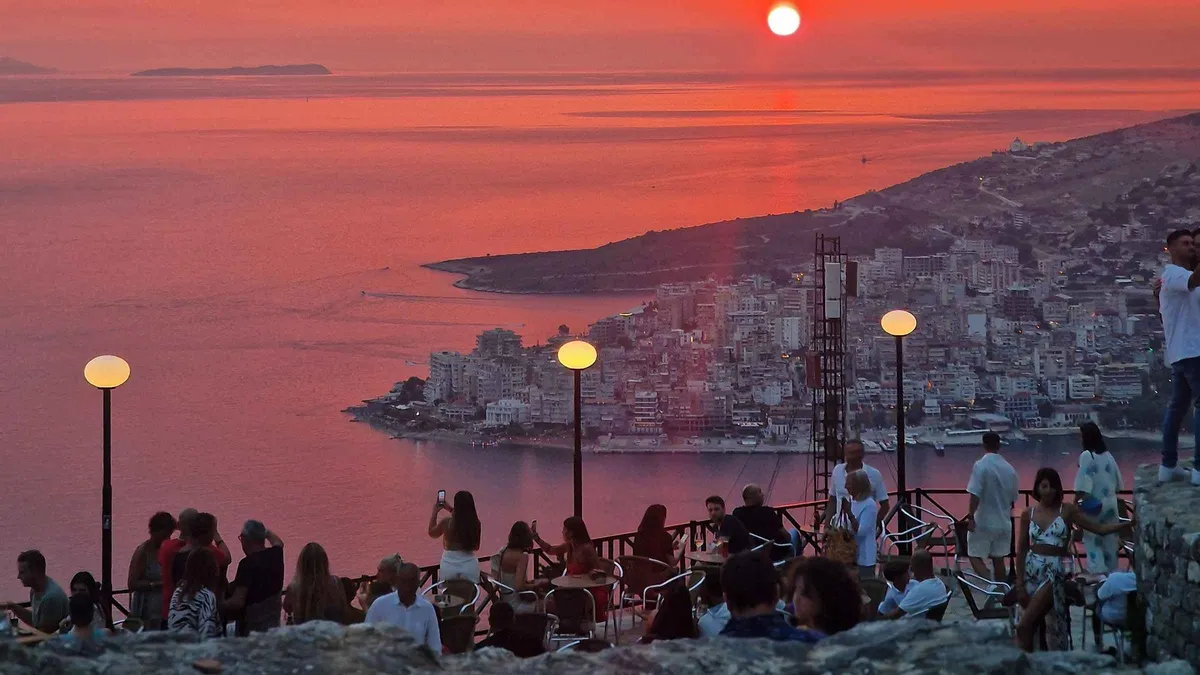
Afternoon departures fill first in July and August, when the light on the water is best between noon and three and the castle terrace fills by seven.

Powered by GetYourGuide

Every Blue Eye Tour on This Page, Compared

Nine listings, three starting points. Short trips leave Saranda or Ksamil and take half a day. Trips from Tirana, Durrës and Golem take the whole of it, four hours each way on the coast road, and pack Ksamil and a boat around the spring to justify the drive. Prices are per person in US dollars from the operators' own GetYourGuide pages, checked on 5 August 2026.

Comfort van group at the turquoise Blue Eye Albania spring before the Lekursi Castle sunset stop, Saranda, Vlorë County from $25.37Most Booked — 4.8★, 1,095 Reviews
Sarande: Blue Eye, Panoramic Train & Lekursi Castle Sunset

★★★★★ ★★★★★ 4.8(1,095 reviews)· 4 hours

Van from central Saranda, the panoramic train up so you skip the 1.8 km walk, free time at the spring, then Lekursi Castle for sunset over Corfu.

Check Availability
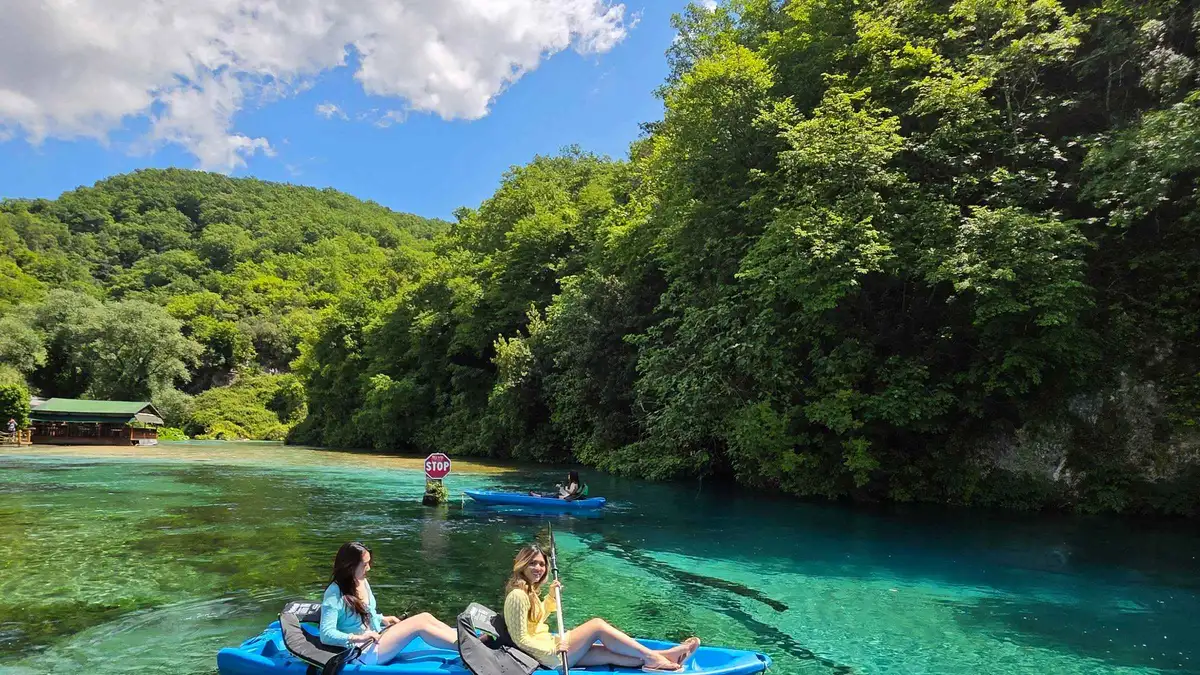
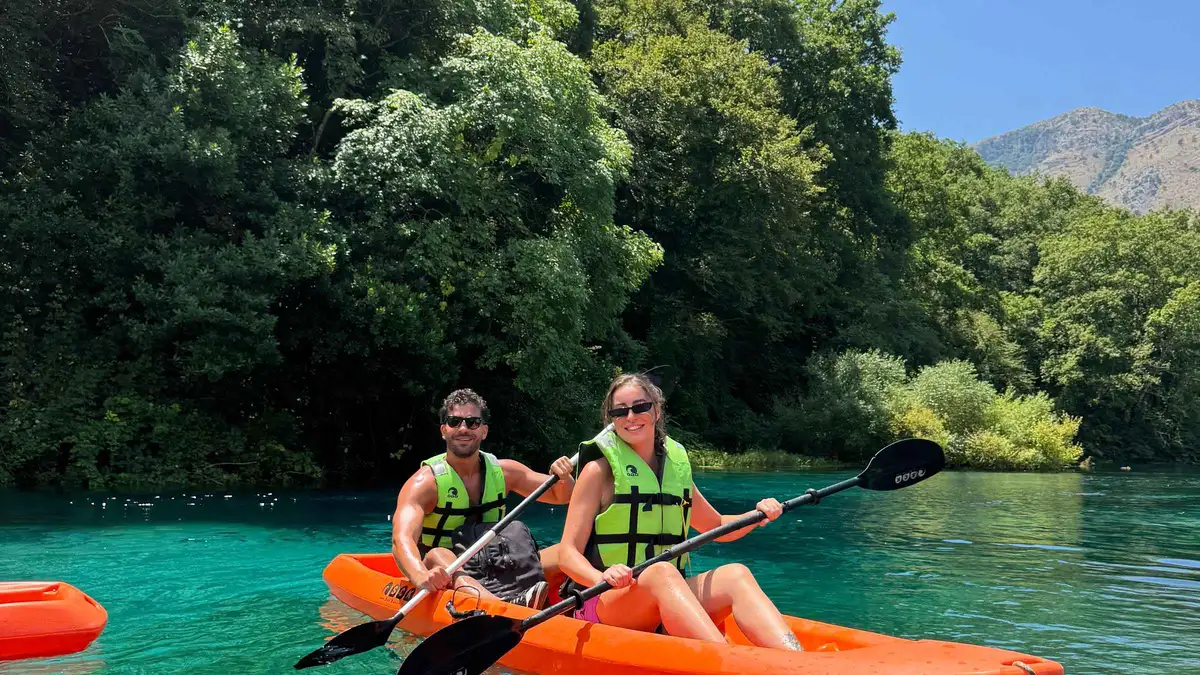
Kayaks and the wooden viewpoint on a flexible Blue Eye Albania tour from Saranda and Ksamil, southern Albania from $20.76Best Value — From $20.76

From Saranda & Ksamil: Blue Eye, Kayak or Lekursi Sunset

★★★★★ ★★★★★ 4.6(393 reviews)· 4 hours

Pick your version at booking: the plain spring visit, the kayak session on the water below, or the castle at sunset. Pickup in Saranda or Ksamil.

Check Availability
Ksamil islands boat trip paired with the Blue Eye Albania spring on a day tour from Tirana and Durrës from $47.74Families — Boat & Beach Day

Tirana/Durres: Ksamil Blue Eye, Saranda & Boat Tour

★★★★★ ★★★★★ 4.5(341 reviews)· 14 - 15 hours

The long day from the capital: the spring inland, then Saranda and the Ksamil islands by boat. Fourteen to fifteen hours, roughly eight of them driving.

Check Availability
Kayaker paddling the lake below the Blue Eye Albania spring on a kayak adventure from Saranda, Vlorë County from $39.21Active Half Day — Kayak & Swim

Blue Eye Kayak Adventure,Panoramic train & Lekuresi Castle

★★★★★ ★★★★★ 4.8(441 reviews)· 4.5 hours

Starts at Lekursi Castle, then kayaking with swimming time on the lake downstream, and an hour at the spring itself before the run back to Saranda.

Check Availability
Vjosa river and coastal stops on a full-day Blue Eye Albania tour from Tirana, Durrës and Golem from $51.32Sightseers — Five Stops in a Day

Tirana/Durres/Golem: Saranda, Ksamil, Blue Eye, Vjosa & Boat

★★★★★ ★★★★★ 4.7(1,147 reviews)· 15 - 17 hours

The widest southern loop from Tirana, Durrës or Golem: the spring, Saranda, Ksamil beaches, the Vjosa river and a boat trip, all in one 15 to 17 hour…

Check Availability
Quad bikes on the gravel track along the Bistrica river beside the Blue Eye Albania spring near Saranda from $55.47Adrenaline — Quad Along the River

Sarandë: Blue Eye and Bistrica River Quad 4x4 Tour

★★★★★ ★★★★★ 4.9(173 reviews)· 2.5 hours

Two and a half hours on a quad along the Bistrica river to the spring, with a traditional lunch in the countryside. The shortest trip on this page.

Check Availability
Turquoise coves at Ksamil on the day trip that also visits the Blue Eye Albania spring from Tirana from $34.60First-Timers From Tirana

Tirana/Durrës/Golem: Sarandë, Ksamil & Blue Eye Day Trip

★★★★★ ★★★★★ 4.7(473 reviews)· 15 hours

The leaner day trip from the capital: Saranda, the turquoise coves of Ksamil and the spring, without the boat leg that stretches the others past 15 hours.

Check Availability
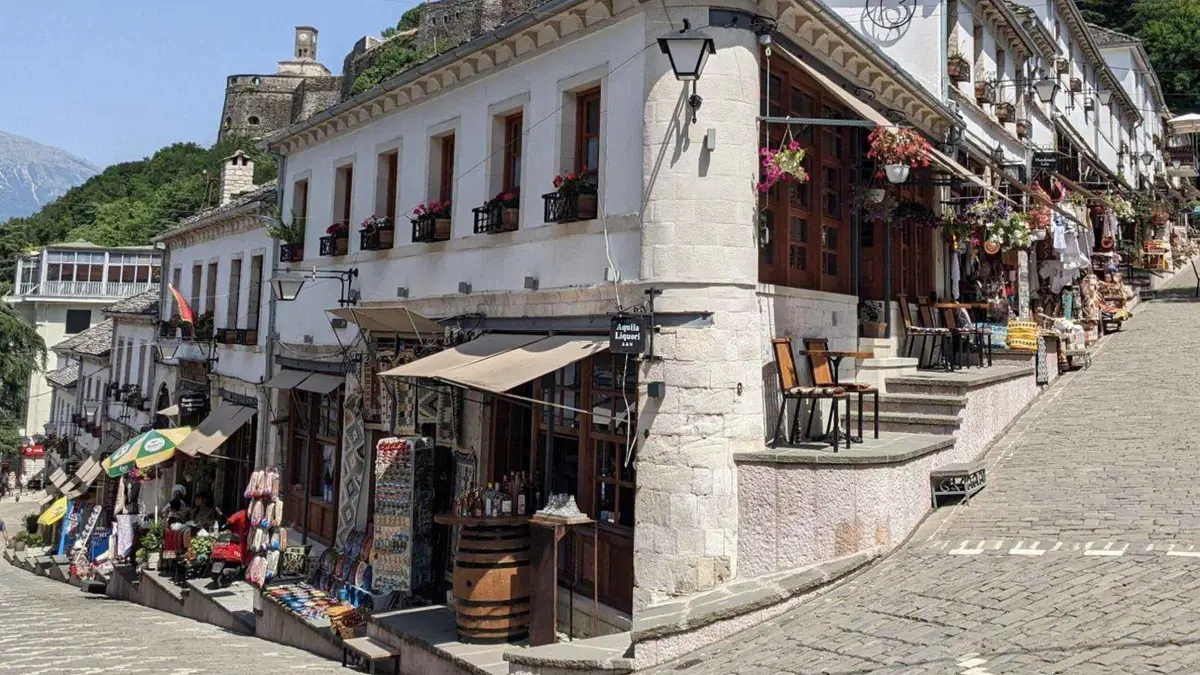
Ottoman stone houses of Gjirokaster on the day tour combined with the Blue Eye Albania spring from $36.12History Lovers — UNESCO Gjirokaster

Sarandë/Ksamil: Tour Gjirokaster,Blue Eye & Lekursi Castle

★★★★★ ★★★★★ 4.8(403 reviews)· 7 hours

Ottoman Gjirokaster and its hilltop fortress paired with the spring and Lekursi Castle, seven hours from Saranda or Ksamil.

Check Availability
Gjirokaster old town bazaar street on the full-day tour with the Blue Eye Albania spring and Lekursi Castle from $35.29Unhurried Pace — 8.5 Hours

Ksamil or Saranda: Blue Eye, Gjirokaster Old Town & Lekursi

★★★★★ ★★★★★ 4.8(220 reviews)· 8.5 hours

The slower version of the Gjirokaster pairing: 8.5 hours, with real time in the stone town's bazaar streets rather than a photo stop.

Check Availability

Half-day trips from Saranda sell out fastest in the first three weeks of August, and the quad tour runs one departure a day.

Free cancellation up to 24 hours before departure

Check Availability

Which Blue Eye Tour Fits Your Day

The difference that matters most is where you sleep. From Saranda or Ksamil the spring is a half day. From the capital it is a 15-hour round trip, and the Blue Eye is one stop out of four.

Tour From Length Book Starts Also includes Train up
Blue Eye, panoramic train & Lekursi sunset $25.37 4 h Saranda Lekursi Castle at sunset Yes, one way
Blue Eye, kayak or Lekursi sunset $20.76 4 h Saranda or Ksamil Your choice of kayak or castle No
Ksamil, Blue Eye, Saranda & boat $47.74 14–15 h Tirana, Durrës Ksamil islands boat trip No
Blue Eye kayak adventure & Lekuresi $39.21 4.5 h Saranda Kayaking and swimming on the lake Yes
Saranda, Ksamil, Blue Eye, Vjosa & boat $51.32 15–17 h Tirana, Durrës, Golem Vjosa river and a boat trip No
Blue Eye & Bistrica river quad 4x4 $55.47 2.5 h Saranda Quad ride and a country lunch No
Saranda, Ksamil & Blue Eye day trip $34.60 15 h Tirana, Durrës, Golem Ksamil beach time No
Gjirokaster, Blue Eye & Lekursi Castle $36.12 7 h Saranda, Ksamil Gjirokaster old town No
Blue Eye, Gjirokaster old town & Lekursi $35.29 8.5 h Saranda, Ksamil Longer stop in Gjirokaster No

What the Blue Eye Actually Is

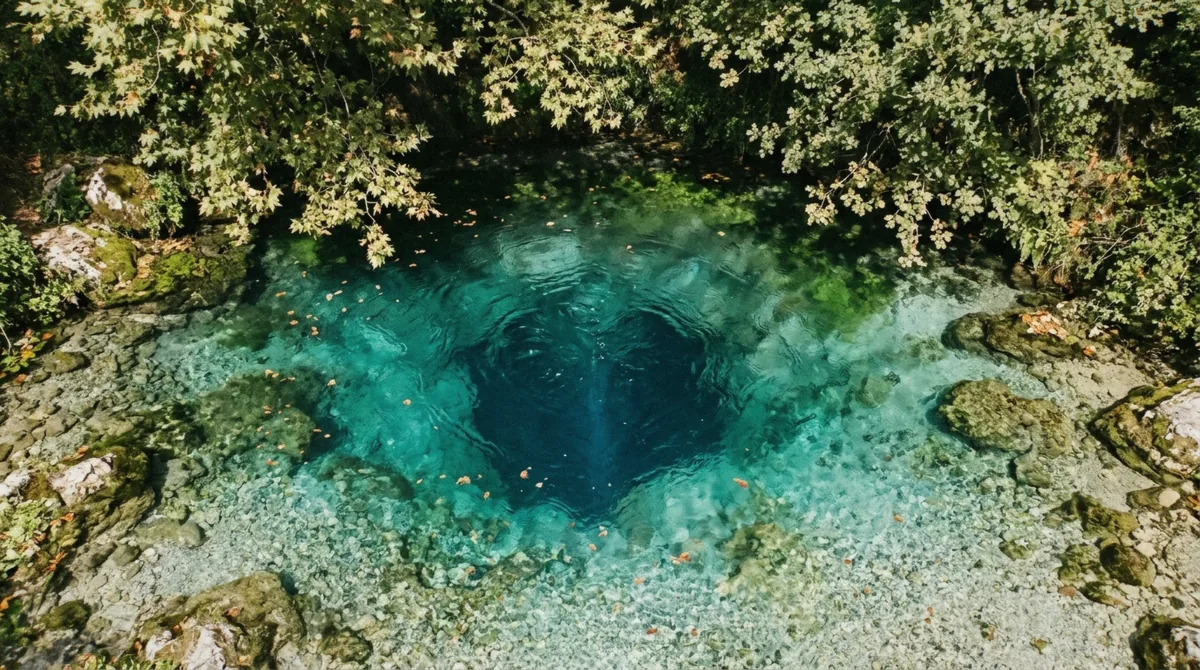
Turquoise water welling up over the dark central shaft of the Blue Eye Albania karst spring at Syri i Kaltër near Saranda

A hole in the limestone, not a lake

Rain that falls on the Mali i Gjerë ridge behind Muzinë does not run off the surface. It sinks into limestone, dissolves its way through cracks over centuries, and travels underground until pressure forces it back up. Geologists call that a karst resurgence. At the Blue Eye it happens in one spot, through a vertical shaft you can look straight down into, and the water arrives at 18,400 litres a second.

That volume is the whole story of the place. It gives you the Bistricë river, which runs 25 km west and reaches the Ionian Sea south of Saranda, and it has powered mills and irrigation in this valley for as long as anyone here has farmed. The source sits at 152 metres above sea level, which is why the water reaches Saranda under its own weight.

The dark circle in the middle is the shaft itself. Around it the water spreads into a shallow pool over pale gravel, and the two colours together give you the eye: a black pupil in a turquoise iris. Albanians named it Syri i Kaltër, the Blue Eye, long before anyone photographed it from a drone.

Why the water looks like that

No mineral dyes this water blue. The colour comes from refraction and from what is missing. Rain filtered through limestone arrives with almost no sediment and almost no organic matter, so sunlight travels down instead of scattering back at you from suspended particles. Deep water absorbs the red end of the spectrum first and returns the blue, and with 50 metres of clear column under the surface you get sapphire rather than the pale turquoise of a shallow pool.

That also explains the days people complain about. Under cloud, or before the sun clears the ridge in the morning, the same water reads flat grey-green. Photographs that sold you on this place were taken between roughly eleven and three, when the sun is high enough to drop light into the shaft. The blue is a lighting condition, not a property of the pool.

Heavy winter rain adds the other variable. After a storm the spring pushes harder and carries more fine material, and the clarity drops for a day or two.

The depth nobody has measured

Divers have gone past 50 metres and turned back without touching bottom. The shaft narrows, the current coming up is strong enough to make a controlled descent difficult, and the published figure of 45 to 50 metres is a record of how far people got, not of how deep the hole goes. Wikipedia and the site's own signage both stop at the same honest phrase: the actual depth remains unclear.

The protected area around it covers 180 hectares of oak and sycamore and carries Nature Monument status. Water temperature holds between 10 and 13°C in February and in August alike, because the source never sees the sun. Anyone who has waded knee deep will tell you that touching it for ten seconds is enough.

The spring has failed once in recorded memory. In the summer of 2004 it dried up temporarily. In the summer of 2017 wildfire burned part of the surrounding woodland, and the replanted sections are visible on the slope above the platform.

  • Deepest documented descent: past 50 m, no bottom found
  • Water temperature: 10–13°C in every month of the year
  • Discharge: 18,400 litres per second, steady enough to have run mills for centuries
  • Protected area: 180 hectares of oak and sycamore, Nature Monument status
  • Known failures: dried up in summer 2004, wildfire in the woodland in summer 2017

How Deep Is the Blue Eye

Everything below the platform in this diagram is measured by divers rather than by sonar. The column ends where they turned back, not where the rock does.

Sources: Wikipedia (Blue Eye, Albania), Explore Worldwide geology briefing, Albanian protected-area signage. Checked August 2026.

Tickets, Parking and the Walk In

The paved access road and pine shade on the walk from the car park to the Blue Eye Albania spring near Muzinë

What you pay at the gate

Entry is 50 lek per person, roughly €0.50. A car adds 100 to 200 lek, campers around 800, and motorbikes often pass free. Some visitors report a 300 lek charge for a three-hour stay in the main lot during peak weeks, so budget 400 lek for two people with a car and you will not be short.

Bring cash in lek or euros. There is no card terminal at the barrier and no ATM in Muzinë, which catches out people who arrive from Saranda with nothing but a phone. Euros are accepted at a rounded rate that favours the collector.

The gate is open every day of the year. Hours run around 07:00 to 19:00, stretching to about 20:00 at the height of summer, and closing earlier through the winter when the last light goes at five. Nobody publishes a formal winter timetable, so treat late-afternoon visits in December as a gamble.

WhatCost in lekRoughly
Entry per person50€0.50
Car100–200€1–2
Camper van800€8
Panoramic train, one way300€3
E-scooter rental500 per hour€5
Parking, longer stays in peak seasonup to 300€3

The 1.8 km between the car park and the water

You do not drive to the spring. Cars stop at a lot near the entrance and the last stretch is 1.8 km of paved road, about 20 to 30 minutes on foot, with patchy shade and no gradient worth worrying about. In April that walk is pleasant. At two in the afternoon in July it is the least popular part of anyone's day.

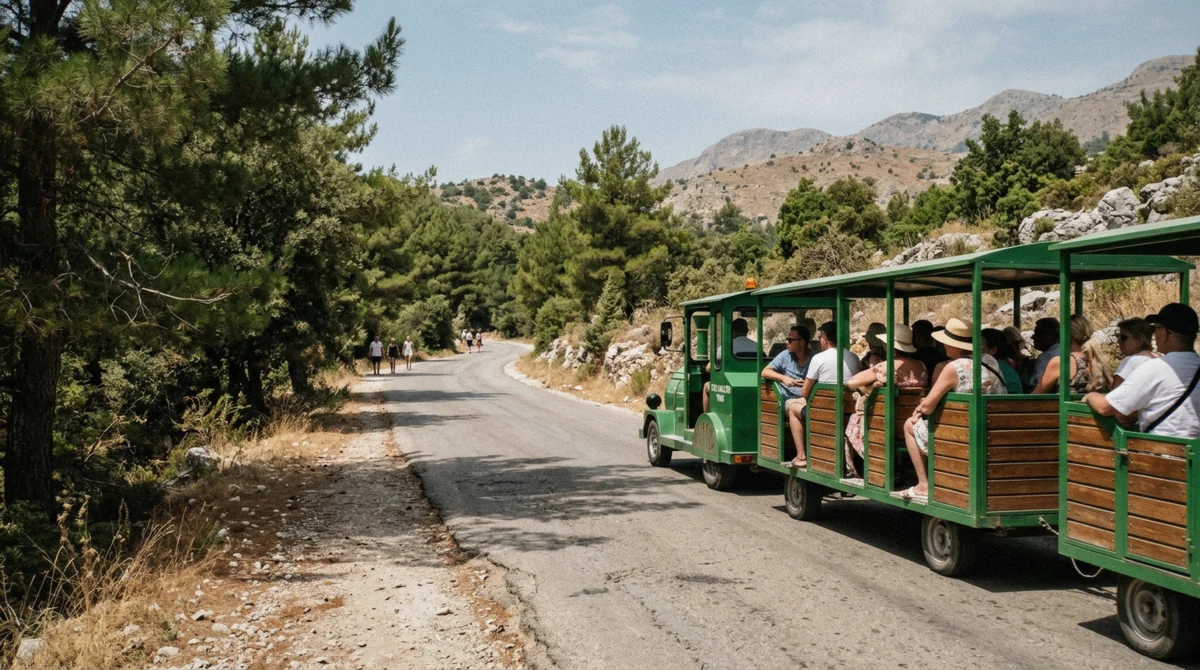
Three alternatives exist. The panoramic tourist train costs 300 lek each way and children ride free, though it runs on a seasonal timetable and usually stops between October and March. E-scooters rent at about 500 lek an hour near the entrance. A forest trail of roughly 2.4 km parallels the road with rougher footing and more shade, which is the better choice if you have the legs for it.

Three of the tours on this page include the train ticket one way, which is worth more than the 300 lek suggests when you are walking back uphill after standing in the sun.

What is up there when you arrive

A railed wooden platform sits over the pool, and a short loop of path lets you see the spring from two or three angles. Below it the water runs out through a shallow channel that is prettier than the eye itself in the opinion of a good number of visitors, and a small yellow footbridge crosses back toward the road.

A café and a restaurant operate beside the water, along with souvenir stalls. Reviews of the food are poor and consistent about it, so bring a sandwich if you want to sit by the river for an hour. Public toilets exist and visitors describe them the same way year after year, which is why most people use the ones in the café.

There are cabins on site under the Blue Eye hotel name, a handful of them, booked out through the season. Guests get the spring to themselves before the gate crowd arrives, which is the single best trick for photographing the place. The Mesopotam agrotourism resort, ten minutes away by car, has a pool and more rooms.

The Blue Eye by the Numbers

Figures from Albanian protected-area records, Wikipedia's hydrology entry, and the tour listings on this page.

18,400 Litres per second Discharge from the spring, enough to fill a 25 m swimming pool in under a minute.
152 m Altitude of the source Which is why the Bistricë reaches the coast without pumping.
180 ha Protected Nature Monument Oak and sycamore woodland around the spring, IUCN category III.
25 km Length of the Bistricë From this hole to the Ionian Sea south of Saranda.
78,000+ Visitors in August 2023 One month, one platform. It explains the midday queue on the walkway.
22 km From Saranda A 30 to 40 minute drive inland on the Gjirokaster road.

Month by Month at the Blue Eye

Bars show a crowd index out of 10 based on visitor reports and August 2023 arrival figures. Temperatures are the average daytime high at Saranda, 22 km down the valley. The water sits at 10 to 13°C in every one of these months.

  • Peak: July and August, midday queues on the platform
  • Shoulder: April to June, September and October
  • Low: November to March, train usually not running

Colour in the pool needs sun overhead, which puts the best light between 11:00 and 15:00 and the thinnest crowd before 09:00. Pick one. Shoulder months let you have both.

Where the Blue Eye Is

Muzinë sits on the SH99 between Saranda and Gjirokaster. The turn-off is signposted, the last kilometre to the ticket barrier is paved, and the car park is a further short stretch of gravel.

What Else Fits in the Same Day

An hour or two covers the spring. Everything below is close enough to add without rushing, and the tours on this page combine them in exactly these pairs.

  • Saranda 22 km west, 30 to 40 minutes. The base most visitors sleep in, with the ferry to Corfu and the promenade restaurants.
  • Ksamil About 50 minutes south. Small turquoise coves and the islands you can swim out to, which is where the coach trips from Tirana spend their afternoon.
  • Butrint A UNESCO archaeological site 30 minutes from Saranda: Greek theatre, Roman baths, Venetian tower, all in a lagoon forest.
  • Lekursi Castle Ten minutes above Saranda. The standard sunset stop on the afternoon tours, looking over the bay to Corfu.
  • Gjirokaster 50 minutes north on the same road, a UNESCO stone town of Ottoman houses under a hilltop fortress. Two tours pair it with the spring.
  • Mesopotam Ten minutes toward Saranda, with the 13th-century Monastery of Saint Nicholas and an agrotourism resort with a pool.

Getting There Without a Car

The bus, and what it leaves you with

The Saranda to Gjirokaster bus passes the Muzinë turn-off. Departures from Saranda station run around 07:00, 10:15 and 14:15, the fare sits near 400 lek, and returns come back past the junction in the late morning, mid afternoon and around 17:40. Timetables in southern Albania move with the season and with the driver, so ask at the station the day before rather than trusting a printed table.

The catch is where it drops you. The bus stops on the main road, which leaves 2 km to the ticket barrier and then the 1.8 km access road beyond it. Add the return leg and you have walked eight kilometres for a spring you will look at for twenty minutes. People do it. Few enjoy the second half.

A taxi from Saranda runs about €40 including a two-hour wait, which splits well between three or four people and removes the whole problem.

Why most people end up on a tour

A half-day trip from Saranda costs $20.76 to $39.21 and covers the transfer, the entry logistics and usually a second stop. Against a €40 taxi that only reaches one place, the arithmetic favours the tour for anyone travelling in a pair.

The $25.37 afternoon tour includes the panoramic train up, which matters more than the price gap suggests in July. The $20.76 flexible option picks up in Saranda or Ksamil and lets you choose between the plain visit, the kayak add-on and the castle sunset. The quad tour at $55.47 is the outlier: 2.5 hours, a ride along the Bistrica and lunch in the countryside, rated 4.9 by 173 people.

From Tirana, Durrës or Golem you are committing to a 14 to 17 hour day and roughly eight hours in a vehicle. The $34.60 version keeps it to Saranda, Ksamil and the spring. The $51.32 one adds the Vjosa river and a boat. Both leave before six in the morning.

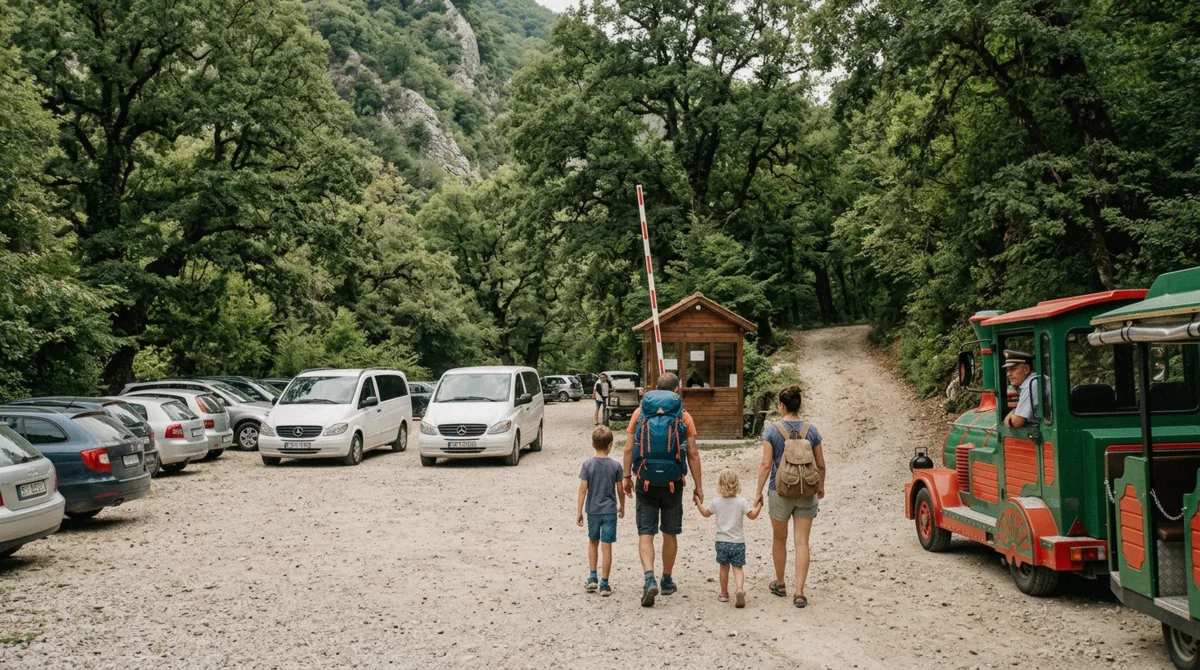
Cars and a tourist train at the entrance car park before the walk to the Blue Eye Albania spring at Syri i Kaltër

Driving yourself

The SH99 from Saranda to Gjirokaster is a good road and the Blue Eye turn-off is signed. Google Maps takes you to the right place, which is not true of every Albanian attraction. Coming from Gjirokaster the detour costs about twenty minutes each way.

Arrive before nine or after five in July and August. The lot fills by mid morning, and once it does the queue backs up onto the approach road. Rental cars in Albania come with the usual advice about full insurance and about not leaving anything visible inside, and the Blue Eye lot is attended during opening hours.

The drive from Tirana takes about four hours each way, which is why the day trips from the capital start at first light and why almost nobody drives it as a return day trip by choice.

Two Blue Eyes: Saranda or Theth

Blue Eye of Saranda (Syri i Kaltër)

  • Southern Albania, near Muzinë, 22 km from Saranda
  • Drive to the car park, then 1.8 km on foot or 300 lek on the train
  • Water 10–13°C, more than 50 m deep, bottom unfound
  • Swimming banned and enforced by guards
  • Café, restaurant, souvenir stalls, cabins on site
  • Covered by all nine tours on this page

Blue Eye of Theth

  • Northern Albanian Alps, in Theth national park
  • About 10 km of mountain trail one way, 3 to 4 hours
  • Water 5–7°C, a chain of pools rather than one shaft
  • Swimming allowed, and the reason people hike up
  • Nothing at the top beyond a seasonal kiosk
  • Reached from Shkodër, a different trip entirely

Verdict Searching for "Blue Eye Albania" mostly lands you here, at the Saranda one, and the two sit six hours apart by road. If your plan involves swimming and a hike, you want Theth. If it involves a beach holiday on the Riviera and an afternoon inland, you want this one.

What Visitors Said After Going

★★★★★ ★★★★★
Beautiful spot and the train saved us in the heat. Bring cash, we nearly got stuck at the barrier with only a card. Twenty minutes at the platform was enough and then we had a coffee by the river.
Marta · Poland, Blue Eye and Lekursi sunset tour · July 2026
★★★★★ ★★★★★
Go early. We arrived at half eight and had the platform almost to ourselves. By eleven there was a queue for the viewpoint and the car park attendant was turning people away.
Ben · United Kingdom, self-drive from Saranda · August 2025
★★★★★ ★★★★★
Guide was honest with us that the swimming everyone sees in old photos is finished, guards blow the whistle now. We kayaked on the lake downstream instead and that was the better part of the day.
Sofie · Belgium, Blue Eye kayak adventure · June 2026
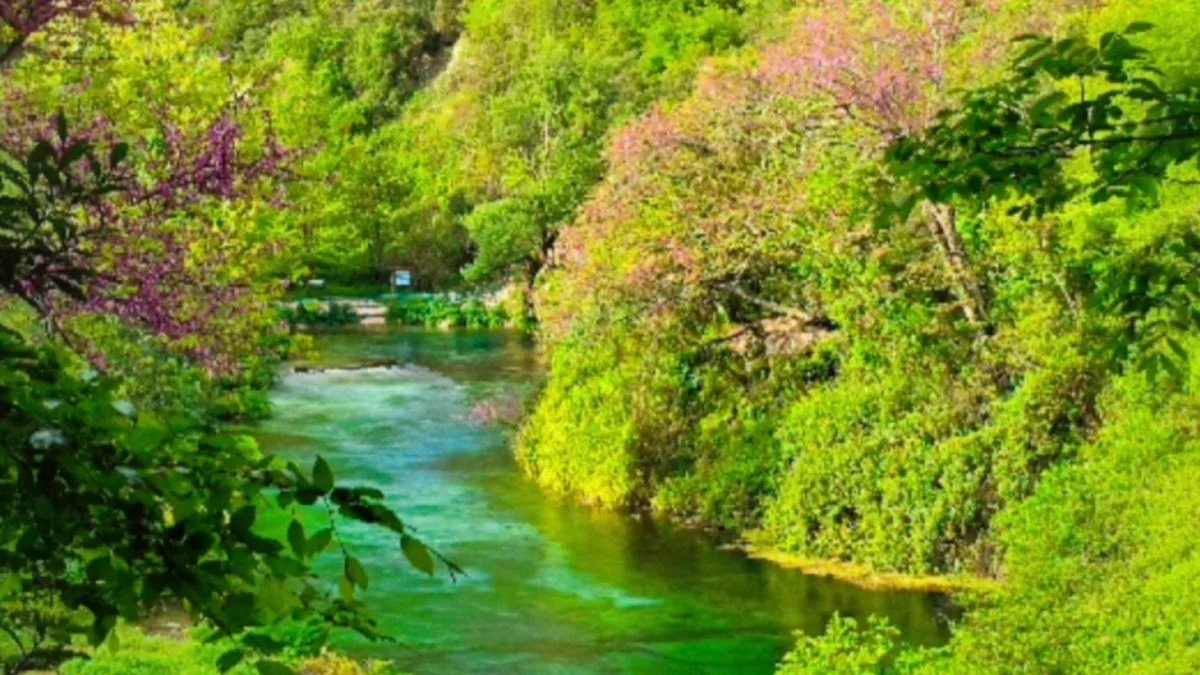
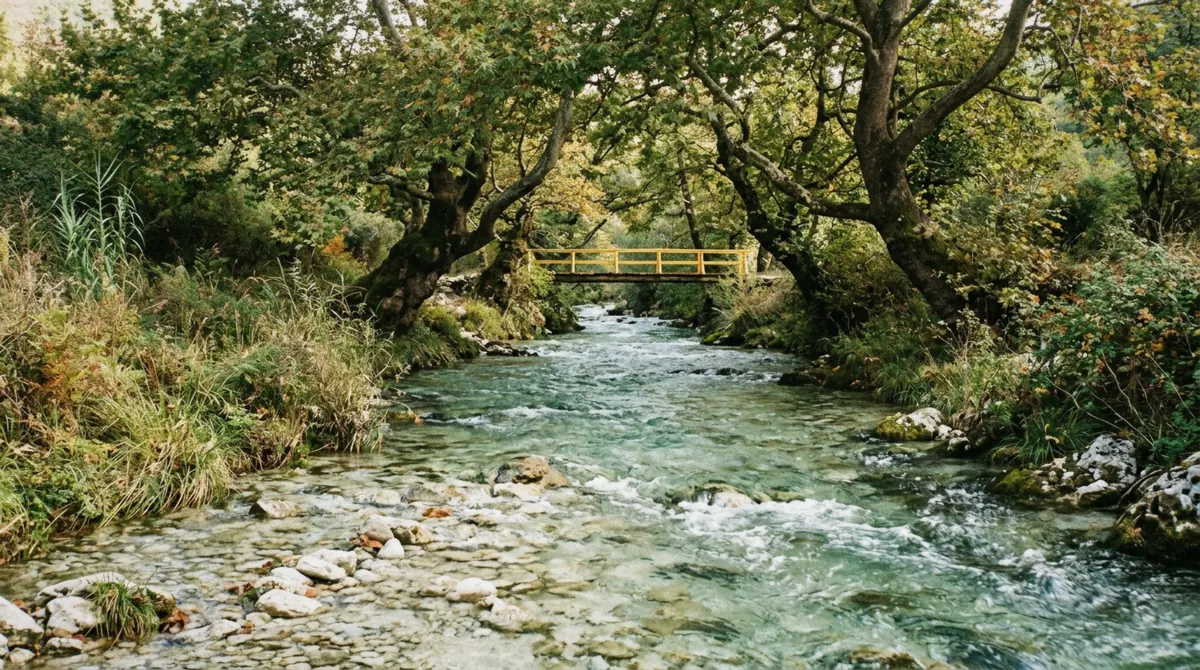
The Bistrica river running out below the Blue Eye Albania spring past overhanging plane trees near Muzinë, southern Albania
The channel below the platform, where the outflow spreads under the trees. Several tours put their kayaking here rather than at the spring, which is the only water in the complex anyone is allowed into.

Reading These Listings Before You Book

Check whether the train ticket is included

Three listings cover the one-way panoramic train, worth 300 lek and about twenty-five minutes of walking in full sun. In April nobody cares. In August it is the difference between arriving at the platform ready to look at something and arriving ready to sit down.

A Tirana day trip is eight hours in a van

The coast road from the capital takes about four hours each way. Listings run 14 to 17 hours for that reason, and the Blue Eye gets an hour of it. If southern Albania is your destination rather than a day out, move down to Saranda or Ksamil and take a half-day tour instead.

Kayaking happens downstream, not in the eye

Two listings sell a kayak session with the spring visit. It runs on the lake and river below, where swimming is also permitted. Nobody paddles on the spring itself, and an operator promising that is describing something that no longer happens.

Entry fees are yours to pay either way

The 50 lek entry is collected at the barrier from tour vans and private cars alike. Most listings do not itemise it. Carry small notes in lek so you are not the person holding up a van of thirty people at the gate.

Ratings here sit in a narrow band

Eight of the nine tours score 4.5 or better, and the spread runs 4.5 to 4.9. Review counts tell you more: 1,147 people have rated the Vjosa day trip and 173 the quad tour, so the first number is a consensus and the second is a sample.

Free cancellation is standard, weather is not covered

Every listing on this page cancels free up to 24 hours ahead. No operator refunds you because cloud made the water look grey, and that call is yours to make the evening before when you see the forecast.

Is the Blue Eye Worth It, Honestly

The case against, made by people who went

Read the blogs that rank for this place and a pattern shows up. The site is small. The car park is bigger than the pool. Restaurants beside the water have poor reviews, the toilets are worse, and the whole complex has been built out year after year to handle a crowd that keeps growing. One writer counted the time it takes to see everything at three minutes.

The honest complaint underneath all of it is expectation. Photographs of the Blue Eye are shot from directly above with a drone, in overhead sun, with nobody on the platform. What you get is a railed deck, a queue behind you in August, and a pool that reads dark unless the light cooperates.

The swimming ban sharpened this. For years the answer to "is it worth it" was that you could jump into water at 10°C and feel the current push you back up in a second. That is over. Guards enforce the barrier now, and the trip is a viewing trip.

The case for

Nowhere else in Albania puts this much water in front of you in one spot, and the sound of it carries down the valley before you see anything. The colour on a clear day at noon is not exaggerated by the photographs, only cropped by them. Standing over a shaft that divers could not bottom is worth the 50 lek by itself.

It also sits on the road you were already driving. Saranda to Gjirokaster passes the turn-off, and a twenty-minute detour buys you the stop. Nobody sensible drives four hours from Tirana for the spring alone, and the day trips that do it wrap Ksamil, a boat and Saranda around it for that reason.

Go before nine or after five, in April, May, September or October, and most of the case against evaporates. Go at one in the afternoon on the second Saturday of August and you will write the same review as everyone else.

Who should skip it

If your Albania trip is short and coastal, and you were coming for the swimming, spend the half day on Ksamil or the boat to the islands instead. The spring gives you a photograph and a walk.

If you are travelling with someone who cannot manage 1.8 km each way and the train is not running, check before you commit. October to March the walk is the only option most days.

And if what you actually pictured was pools you could swim through in a mountain valley, you were thinking of the Blue Eye at Theth in the north. Different trip, different half of the country, six hours apart.

Blue Eye Albania: Common Questions

What is the Blue Eye in Albania?

A karst spring at Muzinë in Vlorë County, southern Albania, known in Albanian as Syri i Kaltër. Water that soaked into the limestone ridge behind it surfaces through a vertical shaft at 18,400 litres per second and forms the Bistricë river, which runs 25 km to the Ionian Sea. The dark shaft ringed by pale shallows is what gives it the name. It holds Nature Monument protection over 180 hectares of oak and sycamore woodland.

Is the Blue Eye in Albania worth visiting?

Worth a detour, not worth a pilgrimage. The site is small and built up, you see it from a platform, and the walk in is 1.8 km. On a sunny day between eleven and three the colour justifies the stop, and it sits directly on the Saranda to Gjirokaster road. Coming from Tirana it makes sense only as part of a full day that also covers Ksamil and Saranda, which is what the day trips from the capital do.

Can you swim in the Blue Eye in Albania?

No. Swimming is prohibited across the complex and the ban is now enforced: guards whistle at anyone who crosses the barrier, where a few years ago people jumped in and nobody stopped them. The spring is a protected natural monument and feeds the regional drinking-water supply. If you want to be in the water, the kayak tours run on the lake and river downstream, where it is permitted.

Is the water in the Blue Eye drinkable?

The spring is the source of the Bistricë and feeds the water supply for the Saranda area, so the water is treated and distributed as drinking water downstream. There is no drinking fountain at the site and nobody should be scooping it out of the pool: keeping human contact out of the spring is the point of the swimming ban. Bring your own bottle.

How deep is the Blue Eye?

More than 50 metres, and nobody knows the real figure. Divers have descended past 50 m without reaching the bottom, held back by the narrowing shaft and the force of water coming up. Published accounts commonly cite 45 to 50 m as the point where dives stopped. Wikipedia's entry states plainly that the actual depth of the karst hole remains unclear.

How much does it cost to enter the Blue Eye?

50 lek per person, about €0.50, plus 100 to 200 lek for a car and around 800 for a camper. Peak-season parking for a longer stay is reported at up to 300 lek. Payment is cash only in lek or euros, and there is no ATM nearby. The panoramic train up to the spring costs a further 300 lek each way.

What are the Blue Eye opening hours?

Open daily all year, roughly 07:00 to 19:00, extending to about 20:00 in high summer and closing earlier in winter as the light goes. No official seasonal timetable is published, so a late-afternoon arrival between November and February is a gamble. The tourist train follows its own schedule and usually stops running from October to March.

How do you get to the Blue Eye from Saranda?

It is 22 km inland on the SH99 toward Gjirokaster, a 30 to 40 minute drive. Without a car: the Saranda to Gjirokaster bus leaves around 07:00, 10:15 and 14:15 for about 400 lek and drops you on the main road, 2 km short of the barrier. A taxi runs about €40 with a two-hour wait. Most people take a half-day tour from Saranda, which costs less than the taxi and adds a second stop.

Do you have to walk from the car park?

The last 1.8 km is closed to cars. It takes 20 to 30 minutes on a paved road with limited shade. The tourist train covers it for 300 lek each way when it is running, e-scooters rent for about 500 lek an hour, and a rougher forest trail of 2.4 km runs parallel with more shade. Three tours include the train one way.

When is the best time to visit the Blue Eye?

April to June and September to October, arriving before 09:00 or after 17:00. The colour needs sun high overhead, which peaks between 11:00 and 15:00, and that is also when the platform is busiest. Shoulder months give you both. July and August at midday is the combination everyone complains about afterward, and August 2023 alone brought more than 78,000 visitors.

How long do you need at the Blue Eye?

One to two hours including the walk in each direction. The platform itself holds most people for ten or twenty minutes. Add an hour if you want to sit by the outflow downstream, which several visitors prefer to the spring, or eat at the café, which reviews suggest you should not.

Is this the Blue Eye near Saranda or the one in Theth?

This page covers the Blue Eye near Saranda, the karst spring at Muzinë. Albania has a second Blue Eye in Theth in the northern Alps, reached by a mountain trail of about 10 km each way, where the water runs 5 to 7°C and swimming is allowed. The two are on opposite ends of the country. Compare them side by side.

Can you visit the Blue Eye from Tirana in a day?

Yes, and it costs you the whole day. Organised trips from Tirana, Durrës and Golem run 14 to 17 hours, roughly eight of them driving, and combine the spring with Saranda, Ksamil and often a boat trip. Prices start at $34.60 and reach $51.32 for the version that adds the Vjosa river. Driving it yourself takes about four hours each way.

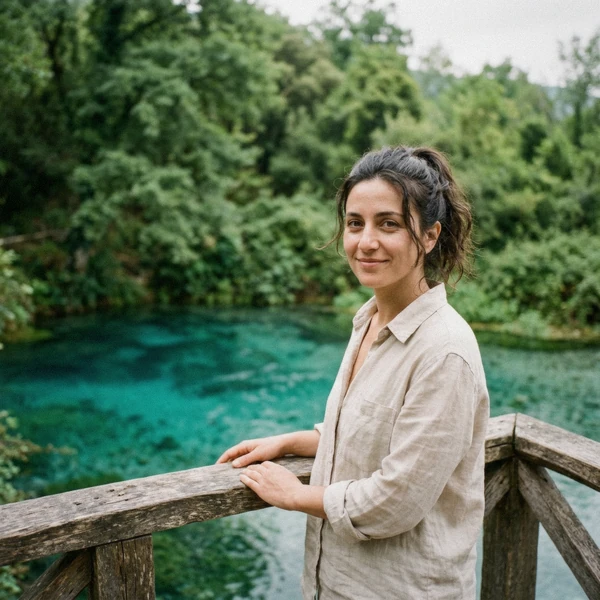
Elira Hoxha, travel writer based in Saranda, on the wooden viewing platform above the Blue Eye Albania spring at Syri i Kaltër, Vlorë County

Your guide

Elira Hoxha

Writer, Saranda · covering the southern Albanian coast since 2019

Grew up an hour from the spring and has driven the Muzinë road in every month of the year, including the December afternoons when the gate shuts before you reach the platform. Checks the fees at the barrier in person each season, because the parking price on every blog is a different number and none of them takes cash off you at the gate.

Book the morning departure and you get the platform before the coaches from the capital arrive at midday.

Free cancellation up to 24 hours before departure

Check Availability
Tours from $20.76 Check Availability