 Blue Eye Albania
Best Time to Visit Blue Eye Albania: Hour by Hour and Month by Month
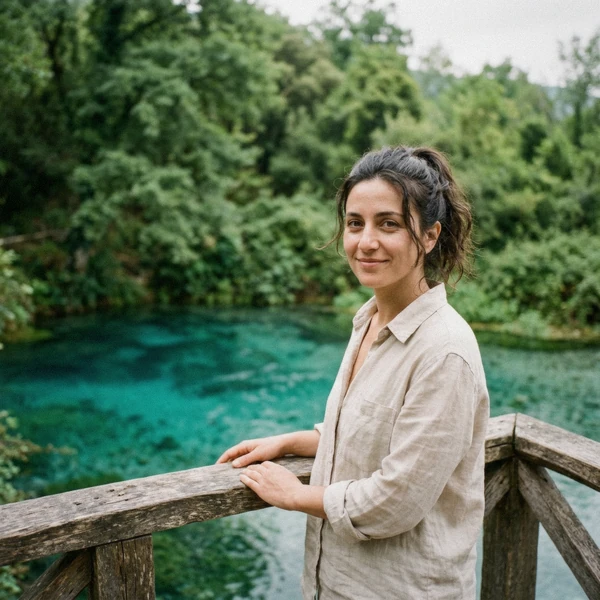
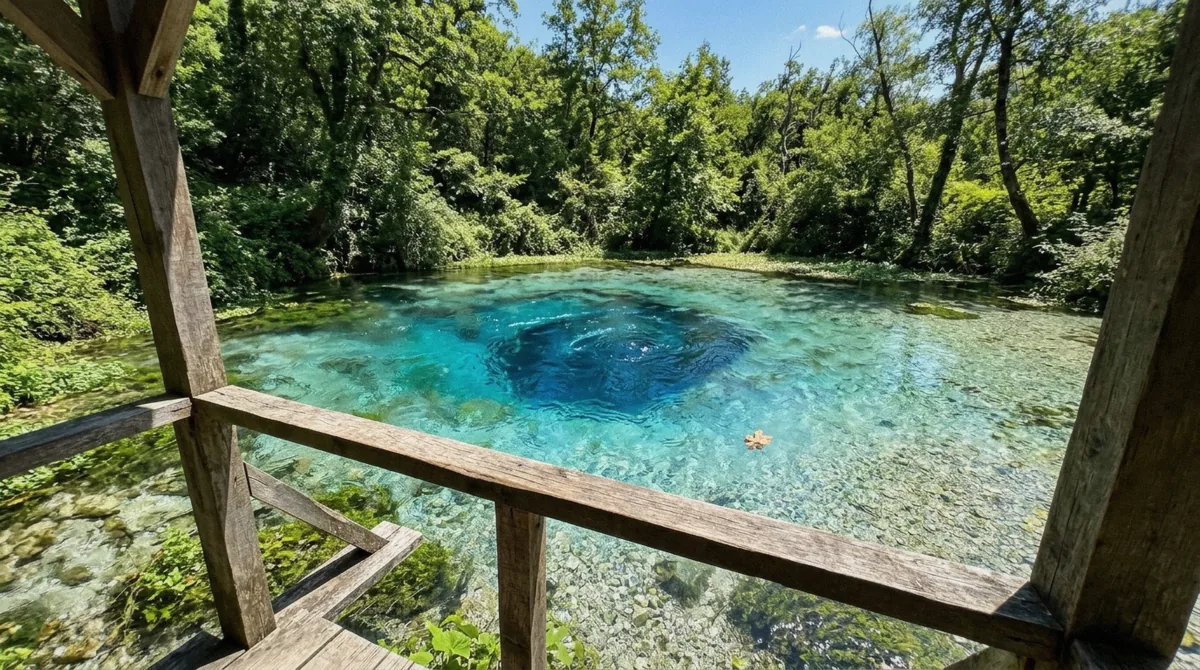
The best time to visit Blue Eye Albania sits inside one honest conflict, and no operator page will tell you about it upfront. The water only turns that famous sapphire colour when the sun sits high overhead, roughly between 11:00 and 15:00, and that exact window is also when the car park fills and the platform gets shoulder to shoulder. Pick a different hour and you trade the colour for calm. Pick a different month and the trade shifts again, since shoulder-season light is gentler on the crowds but shorter in the day. This guide works through both axes, hour first and then month, so you can decide which side of the trade-off actually matters for your trip.
Quick answer
The best time to visit the Blue Eye in Albania for photographs is between 11:00 and 15:00, when direct sun reaches down the shaft and the water reads sapphire rather than grey-green. That window is also the busiest of the day. For the best balance of colour and calm, come on a weekday in April, May, June, September or October, and arrive by 10:30 to get a spot on the platform before the coaches do.
Key takeaways
- The colour needs the sun high overhead, 11:00 to 15:00, which is also the most crowded stretch of the day
- Shoulder months, April to June and September to October, give you warm light without the peak-season crush
- July and August are genuinely the busiest: more than 78,000 people came through in August 2023 alone
- Winter keeps the same water and the same colour, but the tourist train and the restaurant close for the season
- Weekday mornings beat any weekend, in every month of the year
- If your dates are fixed for peak summer, the kayak tour gets you onto the water below the spring before the coach groups arrive on the platform
Best Time by Visitor Type
If you're here mainly for photographs
come on a shoulder-season weekday, arrive by 10:30, and stay through the 11:00-15:00 light window before the afternoon coach traffic peaks.
If you have young kids and want to avoid a meltdown in a crowd
aim for a weekday morning outside July and August, when the platform queue is short and the walk in is cooler.
If you actively want to avoid crowds and don't mind flatter colour
visit before 09:00 or after 16:00, any month, and accept the water will look more green than blue.
If you're driving through on a Gjirokaster-to-coast route with no flexibility on dates
treat whatever hour you arrive as fixed and read the trade-off below rather than trying to chase the light.
If you're visiting in winter because that's when your trip lands
go anyway. The water holds its colour and temperature year-round; you'll just skip the train and the restaurant.
The Trade-Off Nobody Warns You About
Every dramatic photograph of the Blue Eye you've seen online was taken in the same few hours. The spring sits at the base of a wooded gorge, and for most of the day the surrounding trees and the angle of the ridge keep the water in partial shade. Under that shade, or under cloud, the pool reads a flat grey-green, closer to any forest pond than the postcard colour that sold you on the trip. It takes direct, high sun reaching down through the shaft for the water to turn the saturated sapphire everyone is chasing.
That light only exists roughly between 11:00 and 15:00. Outside that window the water is the same depth, the same 10 to 13 degree temperature, and the same karst spring pushing 18,400 litres a second, but it looks like a different place. The problem is that every tour operator, every day-tripper from Saranda and every coach from Tirana also knows, roughly, when the light is good, so the platform is at its fullest exactly when the water is at its best. There is no version of this visit where you get the colour and the calm in the same hour. You choose one, or you split the difference and accept a partial version of both.
Most visitors need one to two hours at the site to walk the platform, take photographs and get back to the car park, two to three if you also walk the forest trail, swim in the river below the spring or eat at the restaurant. Whatever hour you land in, plan for that much time rather than a quick ten-minute stop.
Hour by Hour
How the day actually plays out at the platform
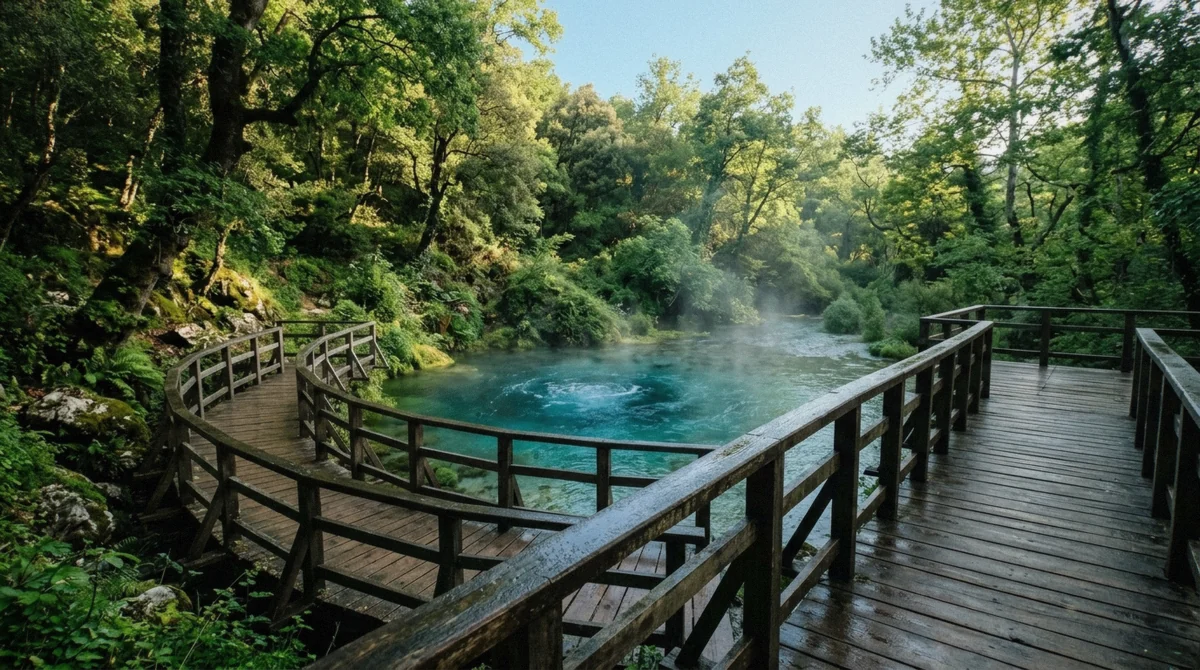
Here is the honest read on each stretch of the day, based on when the light reaches the water and when tour buses and independent visitors arrive.
| Time | Crowd level | Water colour | Verdict |
|---|---|---|---|
| Before 08:00 | Very low | Dim, grey-green in shade | Quietest hour, weak colour |
| 08:00-09:30 | Low | Improving, still muted | Good for a calm walk, early photos |
| 09:30-11:00 | Moderate, rising | Brightening as the sun clears the ridge | Decent middle ground |
| 11:00-13:00 | High | Full sapphire, best of the day | Best colour, worst crowds |
| 13:00-15:00 | High to very high | Still strong sapphire | Peak of both colour and crowd |
| 15:00-16:00 | High, thinning | Colour starting to soften | Coaches beginning to leave |
| 16:00-18:00 | Low to moderate | Fading toward grey-green | Calm again, colour fading |
| 18:00-20:00 (summer only) | Very low | Dim, near closing light | Near-empty, mostly for a walk |
Two windows do the least damage to either side of the trade-off. Arriving by 09:30 gets you meaningfully improving light before the 11:00 rush lands, and staying past 16:00 lets the coaches clear out while the colour is still holding on the way down. Neither hour gives you the full sapphire of high noon, but both beat the 11:00-to-15:00 crush by a wide margin on crowd level.
Month by Month
Reading the table
The crowd index below reflects how full the platform and car park get relative to other months, not an absolute count. Saranda day highs are typical figures for the coastal town nearest the spring; check the forecast close to your dates since any single day can run warmer or cooler.
| Month | Crowd index | Saranda day high | Train running | Restaurant open | Verdict |
|---|---|---|---|---|---|
| January | Low | About 13°C | No, stopped for the season | Closed for the season | Quiet, bare, honest off-season visit |
| February | Low | Cool, similar to January | No, stopped for the season | Closed for the season | Same as January, still quiet |
| March | Low to moderate | About 16°C | No, stopped for the season | Reopening toward season end | Good early-shoulder pick |
| April | Moderate | About 19°C | Yes | Open | Strong shoulder month |
| May | Moderate | About 24°C | Yes | Open | One of the best all-round months |
| June | Moderate to high | About 28°C | Yes | Open | Warm, busier, still workable on weekdays |
| July | High to peak | About 31°C | Yes | Open | Peak season, book around the crowds |
| August | Peak | About 31°C | Yes | Open | Busiest month of the year |
| September | Moderate | About 27°C | Yes | Open | Best trade of warmth and calm |
| October | Low to moderate | About 22°C | Yes, tapering off | Open, tapering off | Excellent, quieter shoulder pick |
| November | Low | About 18°C | No, stopped for the season | Closing for the season | Quiet, mild, worth the trip |
| December | Low | About 14°C | No, stopped for the season | Closed for the season | Quiet, cool, still open daily |
The clearest read from that table: the water and the light physics don't change month to month, but the infrastructure around the spring does. The tourist train usually stops running from October to March, which leaves the roughly 2 km walk from the car park as the only way in during the cooler months, and the restaurant, shops and main car park close outside the summer season entirely. None of that affects the pool itself, only how comfortable getting to it feels.
The Shoulder Months Are the Answer
If you can move your dates at all, April through June and September through October are the answer to the trade-off. Saranda day highs run comfortably from the high teens into the high twenties, the sun is strong enough by late morning to light the water properly, and the platform never fills the way it does in July and August. September in particular gives you summer-level warmth (about 27°C) with a noticeably thinner crowd, since the school-holiday traffic has largely cleared out by then.
April and May trade a slightly cooler start to the day for the calmest crowds of the warm months, which suits anyone prioritizing photographs over swimming afterward. October runs the other way: the train and restaurant are often already tapering toward their seasonal close, so check ahead if either matters to your plan, but the crowd thins out fast once the summer traffic ends.
July and August, If That Is When You Are Here
Plenty of trips are booked around a fixed window, and for a lot of travellers that window is high summer. If your dates fall in July or August, plan around the crowd rather than pretending it isn't there. More than 78,000 people visited the Blue Eye in August 2023 alone, and that pressure lands hardest between 10:00 and 16:00 on any given day.
Three adjustments do most of the work. Arrive before 09:00 or after 16:00 to miss the bulk of the tour coaches, since operators tend to schedule around the same midday light window you're trying to catch. Skip weekends if your schedule allows it at all, for reasons covered below. And book the panoramic train rather than planning to walk, both because the 2 km access road offers almost no shade in July heat and because train tickets sell out on the busiest days. Tickets and parking details live on their own page if you need the full breakdown.
Winter at the Blue Eye
Winter is the most misunderstood season here, and it shouldn't be. The spring itself doesn't slow down for the cold: it holds the same 10 to 13 degree water and pushes the same volume through the shaft in December as it does in July, and on a clear day the colour still turns sapphire in that same midday window. What changes is everything built around it. The train usually stops running from October to March, so the roughly 2 km walk in from the car park becomes the only option. The restaurant, the souvenir shops and the main car park close for the season, so bring your own water and food and expect fewer facilities generally. Opening hours run shorter too, with the site closing well before the 20:00 summer close as daylight fades earlier.
What you get in return is a version of the Blue Eye that most visitors never see: a near-empty platform, a still forest, and the same spring that draws tens of thousands of people a month in August. If you're already in southern Albania in winter, it's a genuinely worthwhile detour, not a consolation prize.
Weekends Versus Weekdays
This is the one variable that holds steady in every season. Albanian families fill the site at weekends, particularly Saturday afternoons and Sunday, adding domestic day-trip traffic on top of the usual tour groups. That pattern repeats from the quiet of January through the peak of August, so a weekday visit is consistently calmer than a weekend one regardless of month.
If you're building a shoulder-season trip and want the single best combination available, a weekday in late April, May, September or early October, arriving before 10:30, is about as close as this place gets to having both the colour and the calm.
Weather and What It Does to the Water
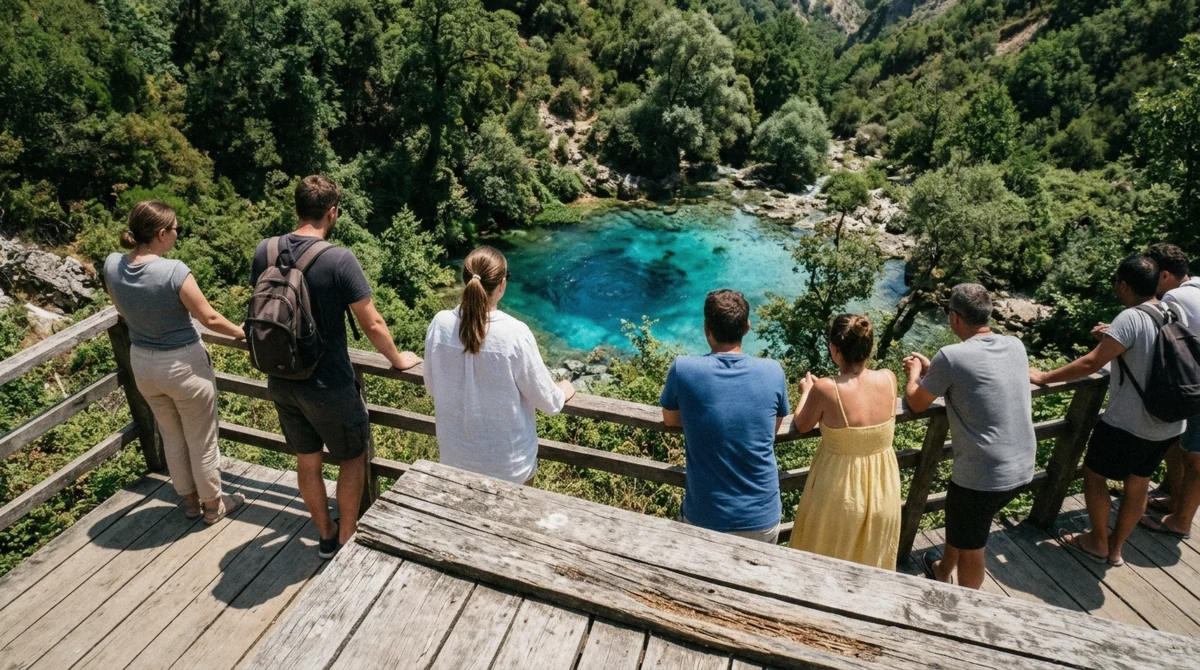
Cloud cover does the same thing to the Blue Eye that it does to any deep, clear pool: it flattens the colour. Without direct sun reaching down the shaft, even a midday visit in the 11:00-to-15:00 window can look closer to green than blue, since the effect depends on light angle rather than the clock alone. There's no way to guarantee a clear sky for your visit, but checking a short-range forecast the day before is worth the five minutes if photographs are the priority.
Rain has a different, slower effect. Heavy winter rain pushes more sediment through the spring and drops the water's clarity for a day or two afterward, since the karst system is flushing more material than usual through the same narrow shaft. It settles again once the flow eases, but if you're visiting shortly after a storm, temper your expectations for the colour regardless of what hour you arrive.
Timing It Inside a Southern Albania Trip
However you're getting here, how you get to the Blue Eye shapes how flexible your timing can be. A self-drive trip from Saranda lets you choose your own hour and beat the coach schedule; a fixed-departure tour usually means accepting whatever slot the operator runs, which for the most-booked panoramic train and Lekursi sunset tour lands in the afternoon, timed so the castle stop catches sunset after the spring. That means you'll likely be at the water during the busier stretch of the day, but you trade that for not driving yourself and for a guaranteed spot on the train rather than the exposed walk in.
We cover the swim ban and where you actually can get in the water on our swimming rules page, since that's a separate question from timing and worth reading before you go regardless of which hour you land in.
Frequently Asked Questions
What time of day is the water at the Blue Eye most blue?
Between 11:00 and 15:00, when the sun sits high enough to reach directly down the shaft. Outside that window the water reads more grey-green than sapphire, even though nothing about the pool itself has changed.
How cold is the water at the Blue Eye year-round?
The spring holds 10 to 13 degrees Celsius in every month of the year, since the source water never sees the sun before it surfaces. Winter and summer visits feel the same on your hand if you dip it in.
Is the Blue Eye worth visiting in winter?
Yes. The water, the colour and the temperature don't change, though the tourist train, the restaurant and the main car park close for the season, and opening hours run shorter as the light fades earlier.
How busy does the Blue Eye get in summer?
Genuinely busy. More than 78,000 people came through in August 2023 alone, and the crowd concentrates hardest in the same 11:00-to-15:00 window that gives the best light.
Does rain affect the colour of the water?
Cloud cover flattens the colour regardless of the hour, since the effect depends on direct light reaching the shaft. Heavy rain adds a second issue: it pushes more sediment through the spring and lowers clarity for a day or two afterward.
Is it better to visit on a weekday or a weekend?
Weekday, in every month of the year. Albanian families fill the site at weekends on top of the usual tour traffic, so a weekday visit is consistently calmer even in the quiet season.