 Blue Eye Albania
Can You Swim in Blue Eye Albania? The Honest Answer
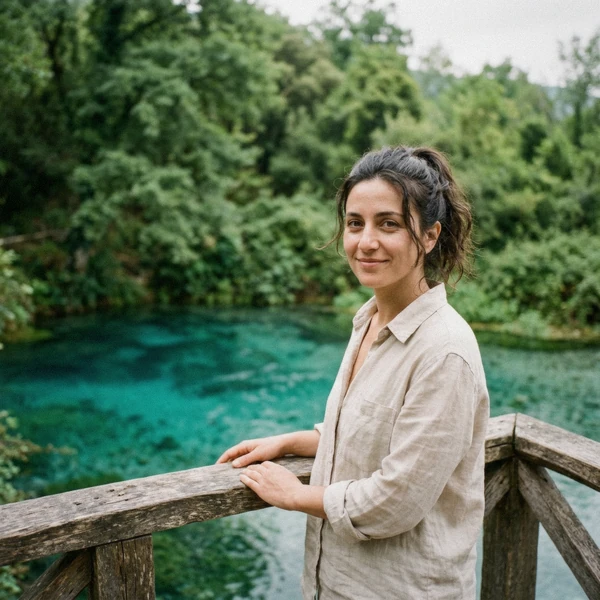
Can you swim in Blue Eye Albania is the question every old blog post gets wrong, because plenty of them are still running photos of people jumping straight into the spring. That was possible a few years ago, when the rule existed but nobody enforced it. It isn't possible now. Guards stand at the fence and blow a whistle at anyone who crosses it, and the pool itself is strictly off limits. What almost nobody writes clearly is the part that actually matters to most visitors: you can swim, legally and easily, in the river just downstream, and you don't have to buy a single thing at the restaurant beside it to do so.
Quick answer
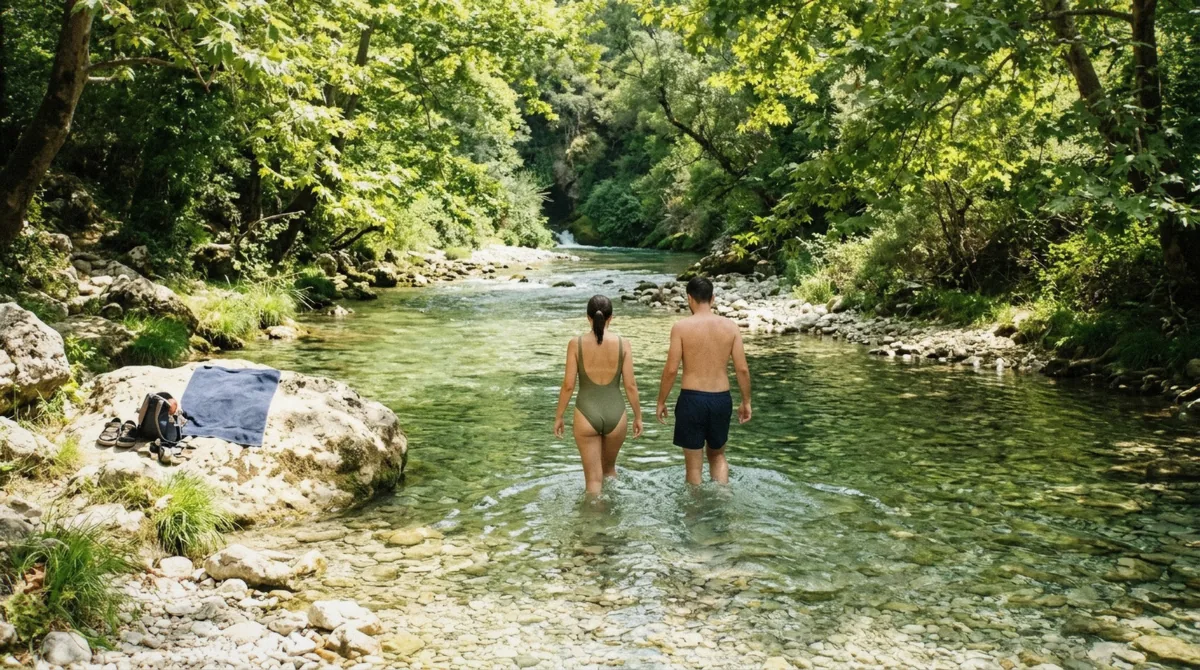
No, you cannot swim in the Blue Eye spring itself. The pool is fenced, signposted, and actively patrolled, and guards blow a whistle at anyone who crosses the barrier. You can swim in the river just downstream, in the spot beside the restaurant, where the water runs about 12 degrees Celsius. You don't need to buy anything at the restaurant to use it.
Key takeaways
- The spring is fenced and swimming inside it is prohibited, protecting both the site and the region's drinking-water supply
- The legal, easy alternative sits downstream by the restaurant, roughly 12°C and shallow enough to walk into
- You don't need to buy anything at the restaurant to reach the swimming spot
- This wasn't always enforced. A few years ago people swam in the spring itself; that stopped once guards and a proper fence went in
- Prefer moving water to standing still? Kayak tours paddle the lake and river below the spring, never the pool
- Looking for a spring where swimming IS allowed inside it? The Blue Eye in Theth, in the north, permits swimming at a colder 5 to 7°C
What to Do With Your Swim Plans
If came specifically to swim in the turquoise pool you saw online
change the plan now: that water is fenced. Book a day on the Ksamil coast instead and treat the spring as a twenty-minute stop.
If want cold water and do not mind where
walk down to the river beside the restaurant. About 12 degrees, easy entry, no ticket and no purchase.
If travelling with children
the shallow river edge works and the platform is railed. Bring a towel, because nothing dries fast in the shade there.
If want to be on the water rather than in it
take the kayak trip that paddles the stretch below the spring at $39.21.
If set on swimming in a Blue Eye at any cost
that is the Theth one in the northern Alps, a different end of the country and a 6.5 km walk.
The Short Answer
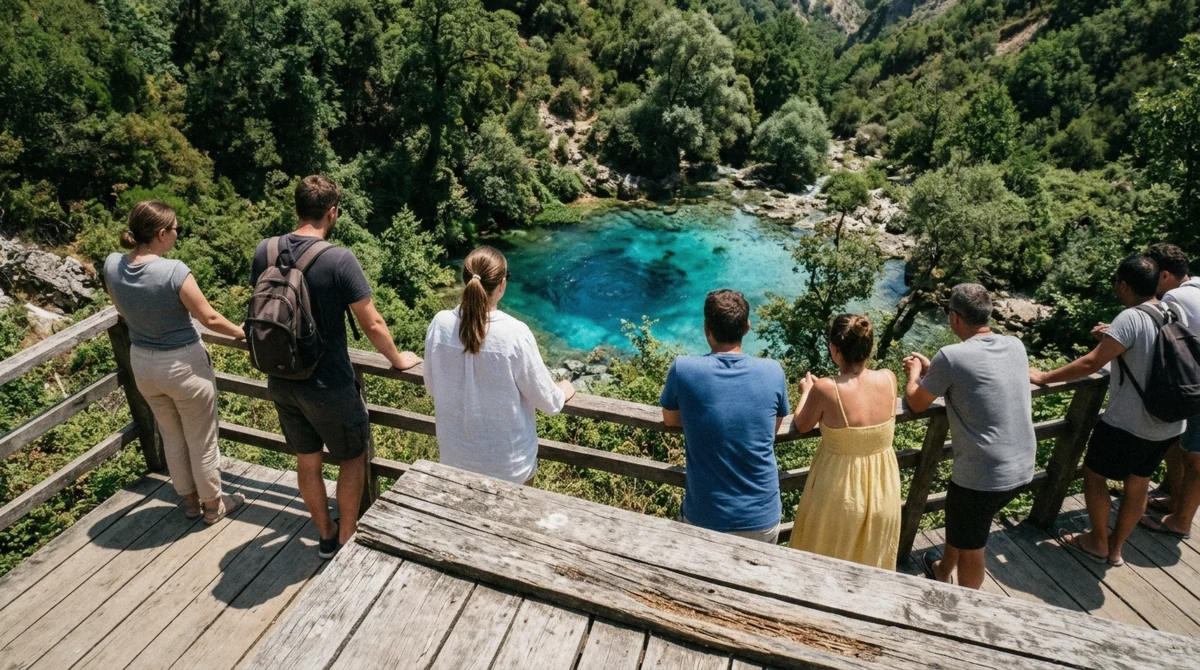
Two separate bodies of water sit within a few hundred metres of each other here, and the rule is different for each. The spring itself, the fenced pool everyone photographs from the wooden platform, is off limits to swimmers, full stop. The river it feeds, which runs past the restaurant a short walk downstream, is open water and swimming there is permitted.
That distinction resolves most of the confusion in older reviews and blog posts. Anyone who swam in the Blue Eye and wrote about it did so in the fenced pool, before enforcement tightened. Anyone swimming here today, legally, is doing it in the river.
It's worth saying plainly why this matters beyond following the rules for their own sake. Confuse the two bodies of water and you either miss out on a swim you were actually allowed to have, because you assumed the whole site was off limits, or you end up climbing a fence you shouldn't, because an old photo made it look normal. Neither outcome is necessary once you know where the boundary actually sits.
Four bodies of water get called the Blue Eye in conversation, and the rules are not the same for any two of them. This is the whole picture in one place.
| Water | Swimming | Temperature | Enforced how |
|---|---|---|---|
| The spring pool at Muzinë | Banned | 10 to 13 degrees Celsius | Fence, signs, guards with whistles |
| The river below, by the restaurant | Allowed | About 12 degrees Celsius | No restriction, no purchase needed |
| The lake the kayak tours use | Allowed, with the operator | About 12 degrees Celsius | Guide supervises, life jackets provided |
| The Blue Eye of Theth, northern Alps | Allowed | 5 to 7 degrees Celsius | Nobody at the pool to stop you |
Why the Ban Exists
The restriction isn't arbitrary, and it isn't really about liability either. The Blue Eye sits inside a protected Nature Monument, and the spring is a working part of the regional drinking-water supply, so keeping swimmers, sunscreen and skin contact out of the source itself is a genuine water-quality measure, not just a photo-op rule.
There's a physical reason on top of that. The spring pushes 18,400 litres of water a second up through a narrowing shaft, and that upwelling current is strong enough to make swimming near the source both disorienting and genuinely risky, independent of the water-quality argument. Add the temperature, a steady 10 to 13 degrees Celsius in every month of the year, and the combination of cold, current and protected status is enough on its own to justify keeping the pool closed to swimmers, whatever the enforcement history has looked like.
None of these reasons apply in the same way a short distance downstream. By the time the water reaches the restaurant, it has already left the protected core of the resurgence, the current has spread out and slowed across the wider riverbed, and swimming there doesn't touch the drinking-water intake the same way wading into the source pool would. That's the practical difference behind why one stretch of the same river is fenced and the next is open.
How It Is Enforced Now
This is where the rule has visibly changed. A few years ago the ban existed on paper but nothing stopped anyone from climbing over and jumping in, which is exactly why older trip reports and photo galleries are full of people swimming in the pool. That gap between the written rule and the reality on the ground has closed.
Today the pool is properly fenced, signage marks the boundary clearly in multiple languages, and staff are stationed nearby specifically to enforce it. Cross the barrier and a guard will blow a whistle at you immediately and wave you back. It isn't a quiet, easily ignored rule anymore; it's actively policed, and the fastest way to have an awkward moment in front of a crowd of other visitors is to test it.
If you're planning a trip based on an older blog post, a forum thread from a few years back, or a friend's photo from before the fence went up, treat that information as out of date. The rule you'll actually meet at the site is the enforced one, not the loosely followed one from those older accounts, and turning up expecting the old version tends to be the single most common source of disappointment we hear about from readers who write in after their visit.
Where You Can Swim Instead
The legal alternative, and how it compares
The river below the spring is the answer to almost everyone's actual question, and it's a genuinely pleasant swim, not a consolation prize. The most popular access point sits right beside the restaurant, a few minutes' walk from the viewing platform.
| Spot | Distance from the platform | Depth and entry | Water temperature | Rules |
|---|---|---|---|---|
| Beside the restaurant | A short walk downstream | Shallow at the edge, easy walk-in entry | About 12°C | Open to swimmers, no ticket needed beyond entry |
| Further downstream, quieter stretches | 10-15 minutes further on foot | Varies, generally shallow near the banks | About 12°C | Open, but fewer people around to help if needed |
| The lake and river the kayak tours use | Below the spring, reached by boat | Deeper in places, paddled rather than waded | About 12°C | Swimming stops are part of some kayak tours |
| The fenced spring pool | At the platform | Unknown past 50 m, no bottom found | 10-13°C | Prohibited, enforced with guards and a whistle |
Entry to the site is 50 lek, and the swimming area downstream needs no extra ticket on top of that. The full breakdown of parking tiers and other fees lives on our tickets and parking page, since pricing is that post's territory, not this one's.
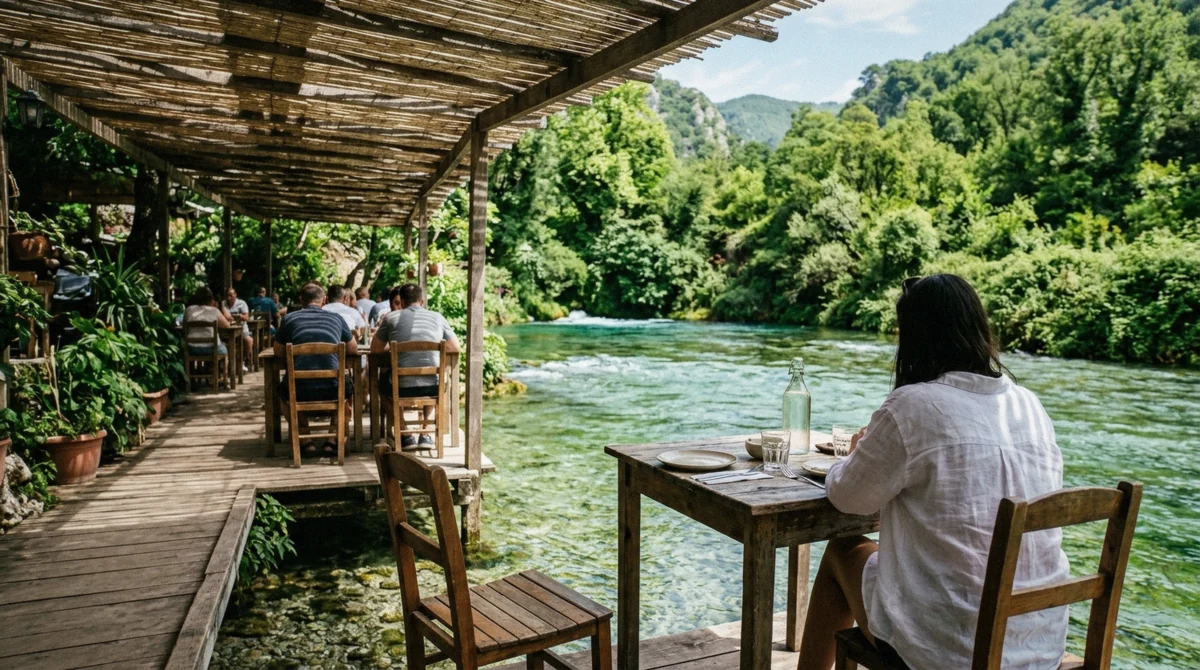
You do not need to buy anything at the restaurant to reach the swimming area. The path down to the river runs past the tables and nobody stops you, though a cold beer afterwards is not the worst idea.
What the Cold Actually Feels Like
Twelve degrees Celsius is not a warm-lake number, and it's worth setting expectations before you're standing knee-deep wondering whether to commit. It sits closer to a glacier-fed lake than anything most swimmers think of as a summer dip, and the shock on entry is real even on a 30-degree August afternoon. Most people manage a few minutes at a time rather than a long swim, warm up on the bank, then go back in.
There's no wetsuit rental at the site, so if cold water genuinely bothers you, plan for short dips rather than an extended swim, and bring a towel you don't mind getting damp fast. Kids especially tend to want in and out repeatedly rather than one long stretch in the water, which the shallow entry point suits well.
The upside of water that cold is that it never really warms up through the season, so the experience in July is close to the experience in April: there's no window where the river swim gets meaningfully warmer, only a window where the air around it does. That makes the decision to get in mostly about your own tolerance for cold water rather than about timing your trip around it.
The Kayak Option
If moving water appeals more than standing in the river, the kayak tours here paddle the lake and the river stretch below the spring, never the fenced pool itself. The dedicated kayak adventure puts you on the water for most of a 4.5-hour trip and is built specifically around the paddle, while the flexible pickup tour lets you choose between the kayak option or a Lekursi Castle sunset add-on depending on what you're in the mood for that day.
Either way, you're on the same river that feeds the swimming spot by the restaurant, just covering more of it by paddle than you would on foot.
Swimming at the Other Blue Eye
If you searched your way here after reading about a Blue Eye where swimming IS allowed, you're probably thinking of a different spring entirely, in the north of the country. Theth's Blue Eye, in the Albanian Alps, permits swimming, and the water there runs even colder, about 5 to 7 degrees Celsius. It's a genuinely different destination, roughly six hours away by road, not a second entrance to this one.
We cover the full comparison, distance, trail and what each one actually offers, on our Blue Eye versus Theth page if that's the trip you're actually planning.
If You Are Travelling With Children
The fenced platform actually works in your favour with kids, since it removes any ambiguity about where they can and can't go near the main pool; the barrier is visible, obvious and firmly enforced. The river swimming spot by the restaurant is the better fit for children anyway: it's shallow at the entry point, easy to wade in and out of repeatedly, and shallow enough near the bank to keep a close eye on a younger child without needing to swim yourself.
Bring water shoes if you have them, since the riverbed is gravel and stone rather than sand, and pack towels and a full change of clothes, since 12-degree water tends to end a child's patience for staying in faster than the adults'. Plan the river swim for after the platform walk rather than before it, too, so nobody is trudging the 2 km access road in wet clothes.
Frequently Asked Questions
Why can't you swim in the Blue Eye spring itself?
It's a protected Nature Monument that also feeds the regional drinking-water supply, and the upwelling current pushing 18,400 litres a second through the shaft makes swimming near the source genuinely risky on top of the water-quality concern.
What happens if you try to swim in the Blue Eye anyway?
Guards patrol the fence and blow a whistle at anyone who crosses it, waving them back immediately. It's actively enforced now, not a quietly ignored rule.
How deep is the water you'd be swimming in if it were allowed?
Nobody knows for certain. Divers have gone past 50 metres without finding the bottom, which is part of why the ban exists in the first place.
Is the river water clean enough to swim in?
Yes, it's the same spring water a short distance downstream, just outside the protected core zone around the source itself, which is why swimming is permitted there and not in the pool.
Do you need a wetsuit for the river swim?
Most people don't bother, but the water sits around 12 degrees Celsius year-round, so expect a real cold shock and plan for short dips rather than a long swim if you run cold.
Was swimming in the Blue Eye always banned?
The rule existed on paper for a while, but a few years ago it went largely unenforced and people swam in the pool freely. That has changed, and a proper fence with active guards is now in place.