 Blue Eye Albania
Blue Eye Albania or Blue Eye Theth: Which One Are You Looking For?
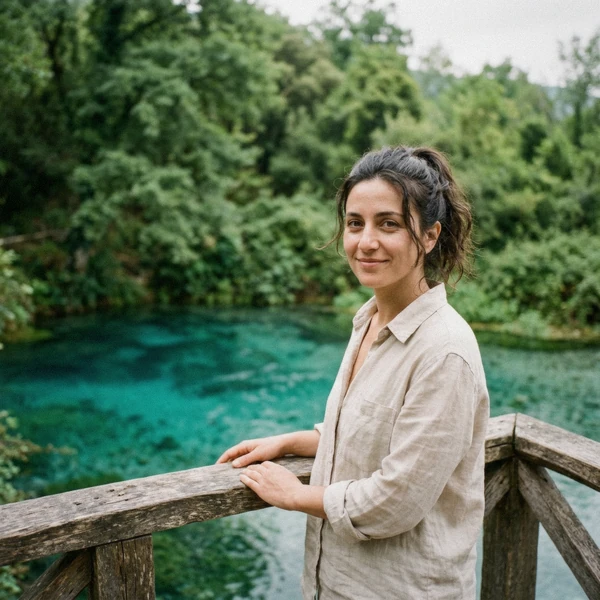
Search blue eye albania theth and you get results for two unrelated places stitched into the same page, which is exactly the confusion this post exists to fix. One Blue Eye is a karst spring near Saranda on the coast, reached by a short walk from a car park, where swimming is banned and enforced. The other is a mountain pool above the village of Nderlysaj in the northern Alps, reached by a real hike, where swimming is the entire point. They share a name, a turquoise colour and almost nothing else, and they sit roughly six hours apart by road. This guide sorts out which one you mean, then gives the Theth side the full detail nobody else on this site covers, since the southern spring already has its own guides for tickets and getting there.
Quick answer
Albania has two Blue Eyes. If you found this site searching for tours, castles or a short drive from the coast, you mean the southern spring near Saranda, a drive-up viewing platform where swimming is not allowed. If someone told you to hike to a mountain pool and jump in, you mean the Blue Eye of Theth in the northern Alps, a 6.5 km round-trip walk from the village of Nderlysaj where swimming is genuinely allowed.
Key takeaways
- Southern Blue Eye (Syri i Kaltër): 22 km from Saranda, drive to a car park then walk, no swimming, covered in full on the Blue Eye near Saranda
- Theth Blue Eye: a 6.5 km round-trip hike from Nderlysaj village, swimming allowed, water around 5 to 7°C
- The two sit at opposite ends of the country, roughly six hours apart by road, and cannot be combined into one day
- Entry to the southern spring is 50 lek plus parking; the Theth trail costs nothing, full fee breakdown on tickets and parking
- Want to swim on a Blue Eye trip? Theth is the one that lets you, not the coastal spring
- Coming from Saranda for a half-day tour? The most-booked trip covers the southern spring only
Saranda's Blue Eye vs Theth's Blue Eye
Blue Eye Near Saranda (Syri i Kaltër)
- Access: drive or shuttle to a car park, then just under 2 km on foot or a 300 lek train ride
- Effort: flat, paved, about 30 minutes each way, suits almost anyone who can walk
- Water: 10 to 13°C year-round, more than 50 m deep with no bottom found
- Swimming: banned in the spring itself, fenced, guards enforce it with a whistle
- Facilities: cafe, restaurant, souvenir stalls, toilets, cabins on site
- Suits travelers based on the Albanian Riviera with an afternoon to spare
Blue Eye of Theth
- Access: a real trailhead hike from the village of Nderlysaj, 8 km south of Theth village
- Effort: 6.5 km round trip, 45 minutes to an hour each way over uneven ground, unsigned beyond paint markers
- Water: 5 to 7°C, colder and shallower than the southern spring, a chain of pools rather than one shaft
- Swimming: allowed, and the reason most hikers make the climb down
- Facilities: two cafes along the trail, nothing built at the pool itself beyond the ladder down
- Suits travelers already in the northern Alps around Theth or Shkoder, doing a hiking-focused trip
Verdict Neither one is a substitute for the other. If your trip is a Riviera beach holiday with a free afternoon, you mean the spring near Saranda and you can skip the rest of this page for the tour comparisons on the homepage. If your trip is a hiking trip through the northern Alps and someone mentioned swimming in a Blue Eye, you mean Theth, and the rest of this post is for you.
Why Albania Has Two Blue Eyes
Both places share a name for the same geological reason. Rain that falls on limestone ridges sinks underground, dissolves its way through cracks over centuries, and eventually reaches a point where pressure forces it back to the surface. Hydrologists call the result a karst resurgence, and Albania has more than one, because limestone terrain runs the length of the country from the Ionian coast to the northern Alps.
What happens above ground differs completely at each site. Near Muzinë, the water surfaces through a single deep shaft and pools in one spot, which is why the southern spring reads as one dramatic hole in the ground. In Theth, the water works its way down a mountainside and collects in a series of smaller, shallower pools fed by snowmelt and rain rather than one deep source. Same underlying process, two entirely different places to stand in front of.
The naming collision is not a marketing accident. Syri i Kaltër, the blue eye, describes a specific visual effect: pale gravel or rock around a dark, deep centre reads as a pupil ringed by an iris, and both sites happen to produce that effect in water clear enough to show it. Locals in both regions arrived at the same name independently, long before either spring had a website or a tour operator attached to it, which is exactly why a search for blue eye albania theth turns up two unrelated results rather than one place with two names.
The Southern Blue Eye Near Saranda, in Short
If you landed here looking for the drive-up spring near the coast, this is the short version: it sits 22 km from Saranda, entry is 50 lek per person plus a tiered parking fee, and you view it from a wooden platform rather than swim in it. Every tour on this site, including the most-booked afternoon trip, covers this spring, never the one in Theth.
The fees, the car park tiers and the walk from the lot are covered in full on tickets and parking, and every way to get there from Saranda, Ksamil or Tirana is broken down on how to get there. Nothing about the southern spring gets repeated in depth on this page. What follows is Theth.
The Theth Blue Eye: The Hike in Detail
The trail starts at the village of Nderlysaj, 8 km south of Theth village itself, and most day visitors park there rather than walk the longer approach from Theth. For comparison, the southern spring near Saranda discharges 18,400 litres per second through a shaft divers have passed 50 m into without finding a bottom, a very different scale of water from the smaller pools you'll find at the end of the Theth trail. Two starting points exist for Theth, and they make very different days.
| Start point | Distance | Time | Elevation gain | Difficulty |
|---|---|---|---|---|
| Nderlysaj village | 6.5 km round trip | 45 minutes to an hour each way, 1.5 to 2 hours round trip | Minimal | Easy to moderate |
| Theth village | 19 km round trip | 6 to 7 hours | About 650 m | Moderate |
Nderlysaj is the version almost everyone means when they ask how long the hike to the Blue Eye in Theth takes. Starting from Theth village itself turns the same destination into a genuine mountain day, with real elevation gain and enough time that you plan around it rather than fit it into an afternoon. A detour to Grunas waterfall, about 30 m high, adds at least an hour to either version and is worth the extra time if you have it.
Parking at the Nderlysaj trailhead is a free gravel lot, though hikers have reported men on mopeds turning up to demand parking money that is not owed. Treat it the same way you would any unofficial roadside collector: politely decline, or confirm with your accommodation beforehand what the real going rate, if any, actually is.
The Walk From Nderlysaj, Step by Step
What the 6.5 km round trip actually looks like on the ground, from the trailhead to the pool.
-
0 min
Nderlysaj car park
Free gravel lot at the trailhead. This is where the mopeds sometimes wait.
-
5 min
First red and white markers
The trail is unsigned beyond these red and white paint markers on rocks and trees, so keep an eye out from the start.
-
15-20 min
First of two cafes
A seasonal cafe along the route, a good spot to check you are still on the marked path.
-
25-30 min
Down into the riverbed
The trail drops toward the river valley, footing gets rougher and less even here.
-
35-40 min
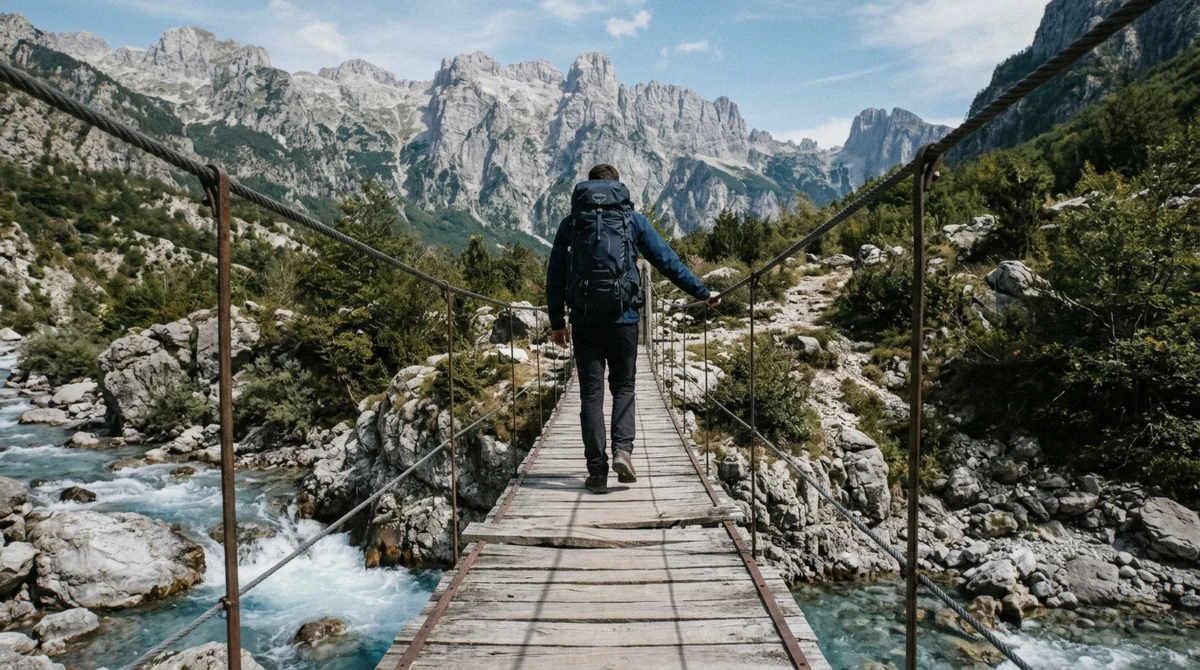
The narrow suspension bridge
A suspension bridge crosses the river; it moves underfoot and is narrow enough that groups cross one at a time.
-
45 min-1 hour
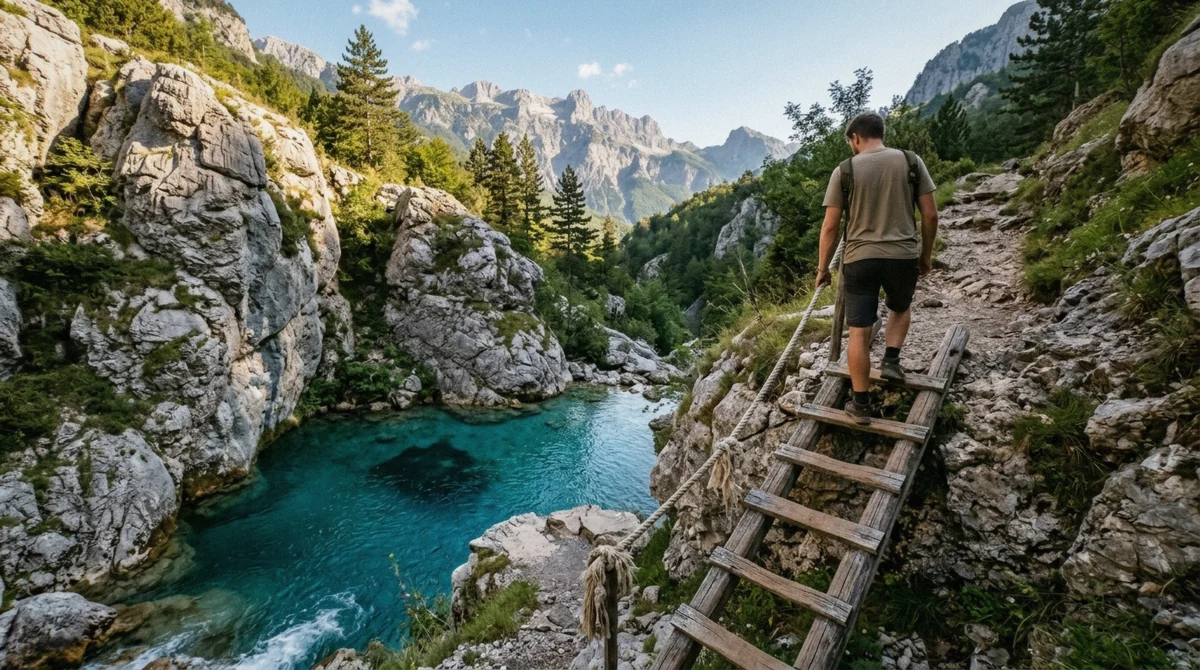
The wooden ladder down
A wooden ladder drops the last stretch to the pool itself. This is the final obstacle before you are standing at the water.
-
1.5-2 hours total
Back at the car park
Retrace the same route; the round trip runs 1.5 to 2 hours including time at the pool.
Swimming: Allowed in Theth, Banned in the South
This is the single biggest practical difference between the two places, and it is why most people who search blue eye albania theth are actually trying to figure out which one they can jump into. At the Theth Blue Eye, swimming is allowed, and it is the reason hikers make the walk down the ladder in the first place. The water runs about 5 to 7°C, cold enough that most people are in and out within a minute, but nobody stops you.
At the southern spring near Saranda, swimming is banned in the pool itself. It is fenced, signposted, and guards blow a whistle at anyone who crosses the line, a rule that used to be ignored and now is not. The full picture of where swimming is and is not allowed at the southern site, including the river section that does permit it, lives on our dedicated swimming rules guide rather than here. If a cold plunge is the point of your Blue Eye trip, Theth is the one built for it.
Getting to Each One
The two sites are not a two-for-one stop on the same trip. They sit on opposite ends of Albania, and getting between them eats most of a day by itself.
| Base | Distance/time to the spring | How most people arrive |
|---|---|---|
| Saranda → southern Blue Eye | 22 km, about 40 minutes by car | Self-drive, shuttle, taxi or a half-day tour, detailed on how to get there |
| Shkoder → Theth Blue Eye | 3 to 4 hours by bus to Theth, then the Nderlysaj hike | Bus from Shkoder into Theth national park, then walk to the trailhead |
Theth is reached from Shkoder, a bus ride of 3 to 4 hours over mountain roads, followed by the hike itself. There is no shortcut that links the two Blue Eyes into one loop. If your itinerary has both on it, you are planning two separate trips within Albania, not one detour with an extra stop.
The road distance from Saranda to Theth runs through Tirana and then north again, which is why travellers who try to do both in one trip usually end up giving up a full driving day just to reposition, with no sightseeing attached to that day at all. If you genuinely want to see both, the sane order is south first while your legs are fresh from travel, then north for the harder hike a few days later, with a rest day in Tirana between the two legs rather than an overnight bus straight through.
Which One Matches Your Trip?
If you are on a beach holiday on the Albanian Riviera
you want the southern Blue Eye near Saranda, a half-day trip covered by tours from Saranda.
If you are on a hiking trip through the northern Albanian Alps
you want the Blue Eye of Theth, reached from the village of Nderlysaj.
If you have a full week and want to see both ends of the country
treat them as two separate trips; the six-hour drive between them rules out combining them in one day.
If you are travelling with small children
the southern spring's flat walk suits families better than the Theth trail's uneven ground and ladder descent.
If swimming in a Blue Eye is the whole point for you
go to Theth; the southern spring will not let you in the water.
Two Blue Eyes, Six Hours Apart
The southern spring sits inland from Saranda on the Ionian coast. The Theth Blue Eye sits in the northern Albanian Alps, near the Montenegrin border. The road distance between the two pins is roughly six hours.
Which One Is Worth Your Day
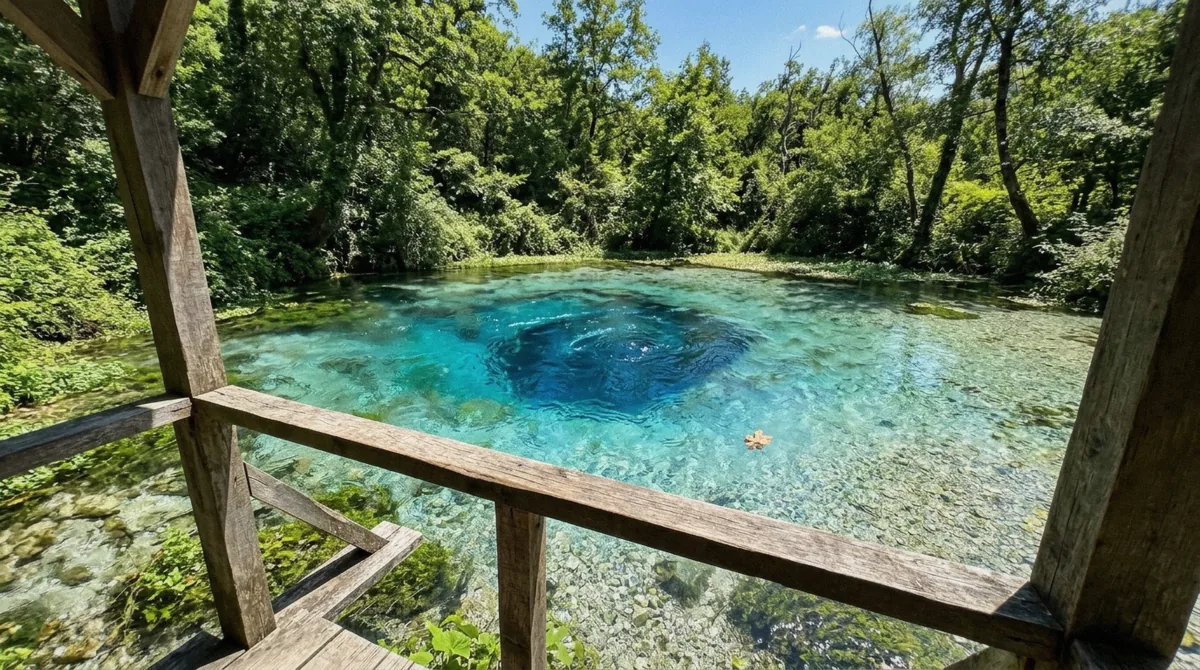
There is no single winner here, only a better fit for the trip you are already on. The southern spring rewards almost no effort: a short paved walk gets you to a genuinely striking piece of water, and it slots neatly into a Riviera itinerary that already includes Saranda, Ksamil or Gjirokaster. Theth rewards actual effort. You earn the pool with a real trail, a suspension bridge and a ladder, and the payoff is a swim the southern site will not give you at any price.
If you are only doing one, let your base decide it rather than the photographs. Coastal trip, southern spring. Mountain trip, Theth.
Frequently Asked Questions
What is the difference between the Blue Eye of Saranda and the Blue Eye of Theth?
The Saranda spring is a karst resurgence you reach by a short paved walk from a car park, viewed from a platform, with swimming banned. The Theth Blue Eye is a mountain pool reached by a 6.5 km round-trip hike from Nderlysaj village, where swimming is allowed. They sit roughly six hours apart by road.
How long does the hike to the Blue Eye in Theth take?
From Nderlysaj village, 45 minutes to an hour each way, 1.5 to 2 hours round trip over 6.5 km. Starting instead from Theth village turns it into a 19 km, 6 to 7 hour day with about 650 m of elevation gain.
Can you swim in the Blue Eye in Theth?
Yes. Swimming is allowed and is the main reason hikers make the walk down the ladder to the pool. The water runs about 5 to 7°C, cold enough that most people don't stay in long.
How do you get to the Blue Eye in Theth from Shkoder?
By bus, roughly 3 to 4 hours over mountain roads into Theth national park, followed by the hike itself from either Theth village or the Nderlysaj trailhead.
Which Blue Eye in Albania is more worth visiting?
Whichever one fits the trip you're already on. The southern spring near Saranda suits a coastal holiday with an afternoon to spare; Theth suits a hiking trip through the northern Alps and rewards the effort with a swim the southern site won't allow.
Can you visit both Blue Eyes on the same Albania trip?
Not in one day. They sit at opposite ends of the country, roughly six hours apart by road, so combining them means planning two separate legs of your trip rather than one detour.
Two springs, one name, and a six-hour drive between them. Once you know which trip you're actually on, the choice makes itself: the coast gives you the easy version with a platform and a car park, the mountains give you the version you have to earn with a ladder and cold water at the bottom. Neither one is the fake.